- Your cart is empty
- Continue Shopping

Buy Bulk Psychedelic Chemicals: Research, Quality Standards, and Regulatory Considerations
Previous pageBuy Bulk Psychedelic Chemicals:
Psychedelic compounds have attracted growing interest from researchers, academic institutions, and healthcare organizations investigating their potential applications in neuroscience, psychiatry, pharmacology, and behavioral science. As scientific interest continues to expand, discussions around buying bulk psychedelic chemicals increasingly focus on research quality, analytical standards, regulatory compliance, and laboratory safety rather than commercial distribution.
This page provides an educational overview of buy bulk psychedelic chemicals, their role in scientific research, and the critical standards required for responsible handling and study.
What Are Psychedelic Chemicals?
Psychedelic chemicals are substances that can alter perception, cognition, mood, and sensory experiences. Researchers study these compounds to better understand brain function, consciousness, neuroplasticity, and potential therapeutic mechanisms.
Common categories include:
- Tryptamines
- Phenethylamines
- Lysergamides
- Naturally occurring psychedelic compounds
- Synthetic psychedelic analogs used in controlled research environments
Scientific investigations often focus on receptor interactions, pharmacokinetics, neurochemical pathways, and behavioral outcomes.
The Growing Importance of Psychedelic Research
Recent years have seen increased academic interest in psychedelic science. Researchers are exploring how certain compounds interact with serotonin receptors and other neurological systems involved in mood regulation, cognition, learning, and emotional processing.
Areas of investigation include:
- Neuroscience research
- Pharmacological studies
- Brain imaging projects
- Receptor binding analysis
- Neuroplasticity research
- Behavioral science
- Clinical trial development
- Mental health research frameworks
The objective of modern research is to improve scientific understanding through rigorous, evidence-based methodologies.
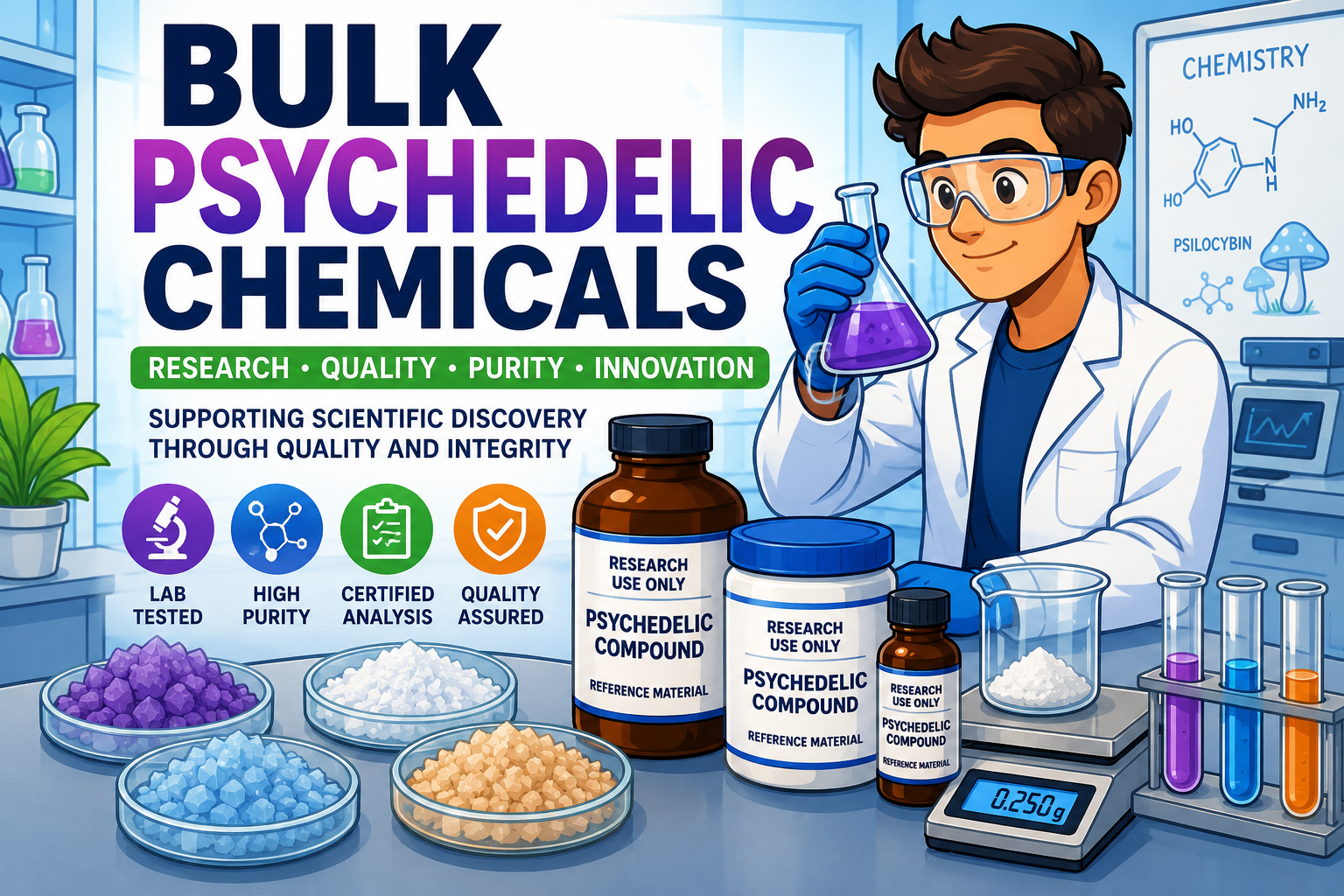
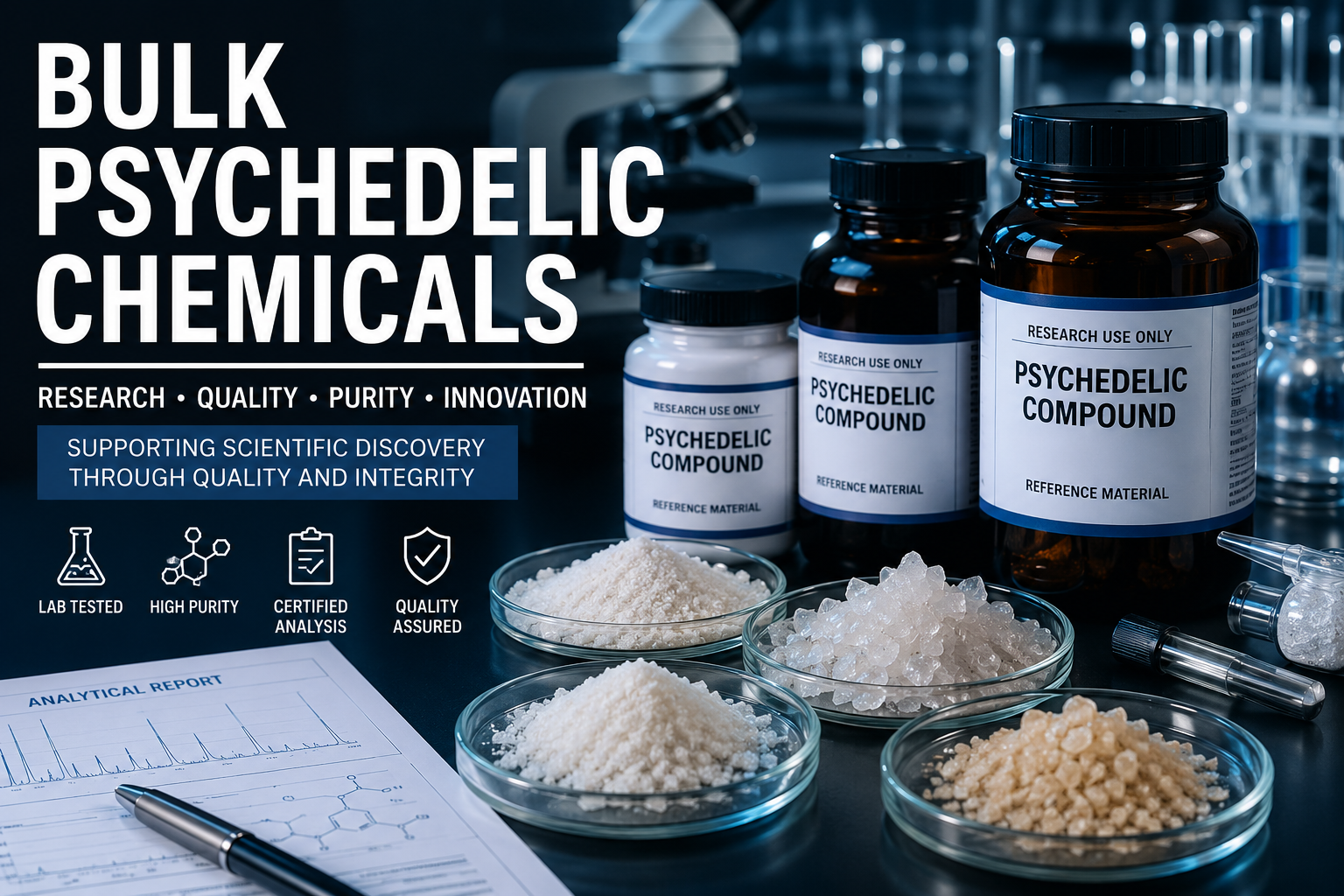
Quality Standards in Research Chemicals
For any laboratory studying psychedelic compounds, quality assurance is essential.
Key quality indicators include:
Purity Testing
Analytical laboratories commonly utilize advanced techniques such as:
- High-Performance Liquid Chromatography (HPLC)
- Gas Chromatography (GC)
- Mass Spectrometry (MS)
- Nuclear Magnetic Resonance (NMR)
- Infrared Spectroscopy (IR)
These methods help verify chemical identity and assess purity levels.
Documentation
Research-grade materials are typically accompanied by:
- Certificates of Analysis (COA)
- Batch identification records
- Laboratory testing documentation
- Stability information
- Safety data sheets
Consistency
Scientific studies require consistent materials to support reproducibility and reliable data collection.
Laboratory Handling and Safety
All chemical research should be conducted in accordance with institutional safety requirements and applicable regulations.
Important laboratory practices include:
- Proper storage conditions
- Secure inventory management
- Personal protective equipment (PPE)
- Chemical hazard assessments
- Staff training programs
- Waste disposal procedures
- Incident reporting systems
Maintaining strong laboratory protocols helps reduce risk and supports research integrity.
Regulatory Compliance
Psychedelic compounds are subject to varying legal classifications around the world. Researchers must ensure compliance with:
- National regulations
- Import and export requirements
- Institutional review standards
- Licensing obligations
- Controlled substance regulations
- Ethical research guidelines
Regulatory frameworks differ significantly between jurisdictions, making legal review an essential component of any research project.
The Role of Analytical Chemistry
Analytical chemistry serves as the foundation of psychedelic research.
Researchers use analytical methods to:
- Confirm compound identity
- Detect impurities
- Measure concentration levels
- Validate stability
- Support quality assurance programs
- Generate reproducible research data
These processes help maintain scientific accuracy and reliability.
Ethical Considerations
Responsible psychedelic research requires adherence to ethical principles that prioritize:
- Participant safety
- Scientific transparency
- Data integrity
- Regulatory compliance
- Independent oversight
- Risk assessment procedures
Ethical standards play a critical role in advancing scientific knowledge while protecting research participants and maintaining public trust.
Future Directions
As psychedelic science continues to evolve, researchers are expected to explore:
- Novel receptor mechanisms
- Brain-network interactions
- Neuroplasticity pathways
- Precision medicine applications
- Advanced analytical techniques
- Improved clinical trial methodologies
Future discoveries may contribute to a deeper understanding of human cognition, brain function, and mental health.
Conclusion
Buy bulk psychedelic chemicals is primarily discussed within the context of scientific investigation, analytical chemistry, and regulated research environments. High-quality research depends on rigorous laboratory standards, verified analytical testing, ethical oversight, and strict regulatory compliance. As interest in psychedelic science grows, maintaining these standards will remain essential for generating credible and reproducible scientific knowledge.