- Your cart is empty
- Continue Shopping


Neurocaine Use: Benefits, Medical Applications, Safety, and How It Works
- Guides
- Posted on
-
by admin
- 0 comments
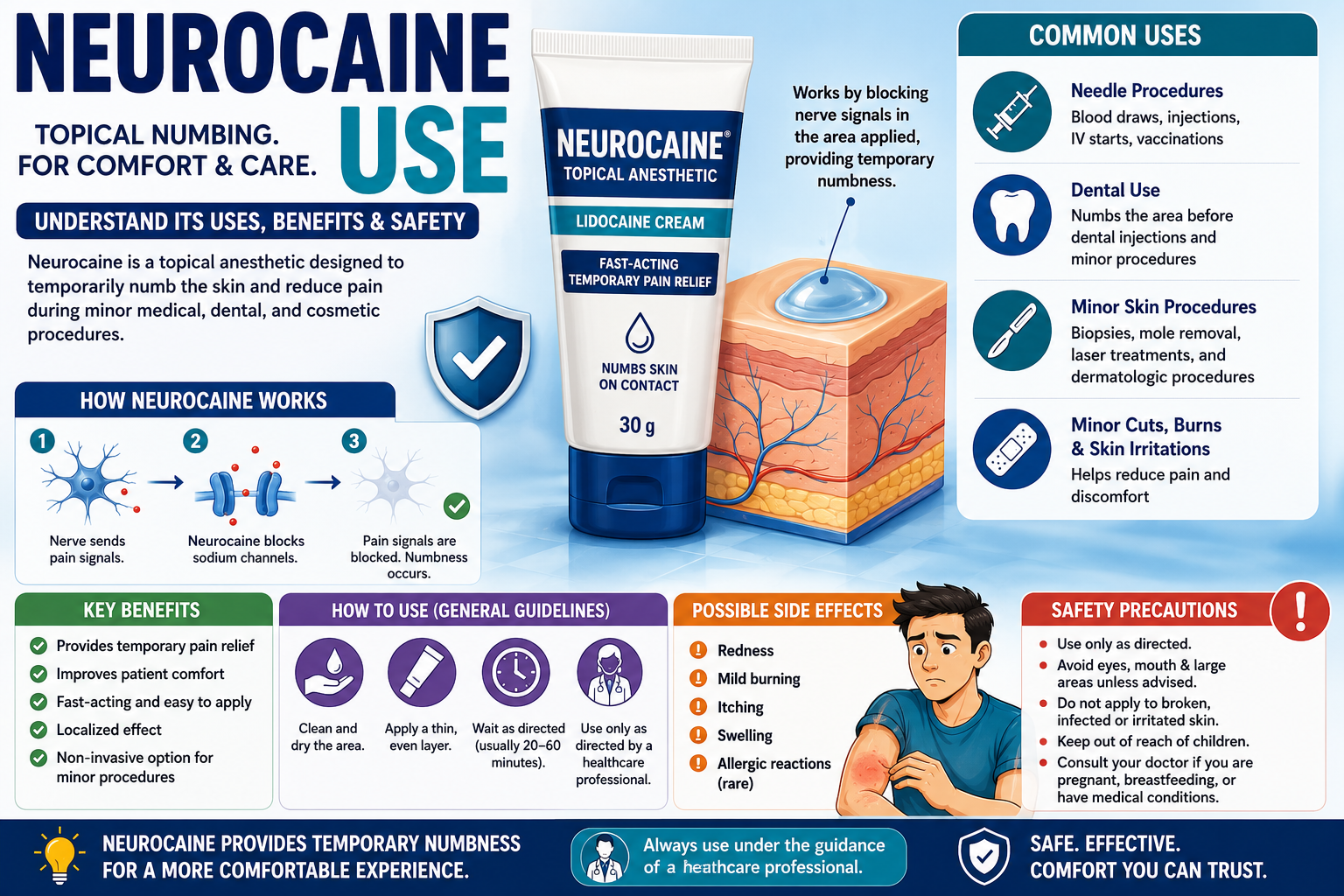
Neurocaine Use:
Local anesthetics play an essential role in modern medicine by helping reduce pain during medical, dental, and minor surgical procedures. Products marketed under names such as Neurocaine are intended to provide temporary numbness by blocking pain signals at the site of application.
Although brand formulations may differ by manufacturer, topical anesthetic products commonly contain local anesthetic agents such as lidocaine, which temporarily block nerve signal transmission and reduce pain perception.
This article explains how Neurocaine-type topical anesthetics work, their common medical uses, potential benefits, possible side effects, and important safety considerations.
What Is Neurocaine?
Neurocaine is marketed as a topical anesthetic product intended to provide temporary local pain relief or numbness before or during certain medical procedures.
Depending on the formulation, topical anesthetic products may be available as:
- Creams
- Gels
- Sprays
- Adhesive patches
- Ointments
Many topical anesthetics rely on lidocaine, an amide-type local anesthetic that stabilizes nerve membranes by blocking sodium channels, preventing pain signals from reaching the brain.
How Does Neurocaine Work?
Local anesthetics reduce pain by interrupting nerve conduction.
Normally:
- Nerves generate electrical impulses.
- Sodium channels open.
- Pain signals travel to the brain.
When a local anesthetic is applied:
- Sodium channels are temporarily blocked.
- Nerve impulses cannot propagate normally.
- The treated area becomes numb for a limited time.
This effect is reversible, and normal sensation gradually returns as the medication is metabolized or wears off.
Common Uses of Neurocaine
Depending on the product and healthcare setting, topical anesthetics may be used to help reduce discomfort associated with:
Minor Skin Procedures
Examples include:
- Skin biopsies
- Small dermatologic procedures
- Superficial wound care
Needle Procedures
Topical anesthetics may be applied before:
- Blood draws
- Vaccinations
- Intravenous (IV) catheter placement
Dental Procedures
Dentists frequently use topical anesthetics before local anesthetic injections to reduce discomfort during needle insertion. Studies show topical lidocaine, benzocaine, and EMLA are commonly used for this purpose.
Minor Burns and Skin Irritation
Certain products may be used to provide temporary relief of localized pain or itching, depending on the approved indication.
Potential Benefits
When used as directed, topical local anesthetics may offer several advantages.
Temporary Pain Relief
They reduce discomfort without affecting consciousness.
Improved Comfort During Procedures
Many patients experience less anxiety when painful skin sensations are minimized.
Rapid Onset
Many lidocaine-containing products begin producing local numbness within minutes, although onset varies by formulation and site of application.
Localized Action
Topical anesthetics act primarily where they are applied, limiting systemic exposure when used correctly.
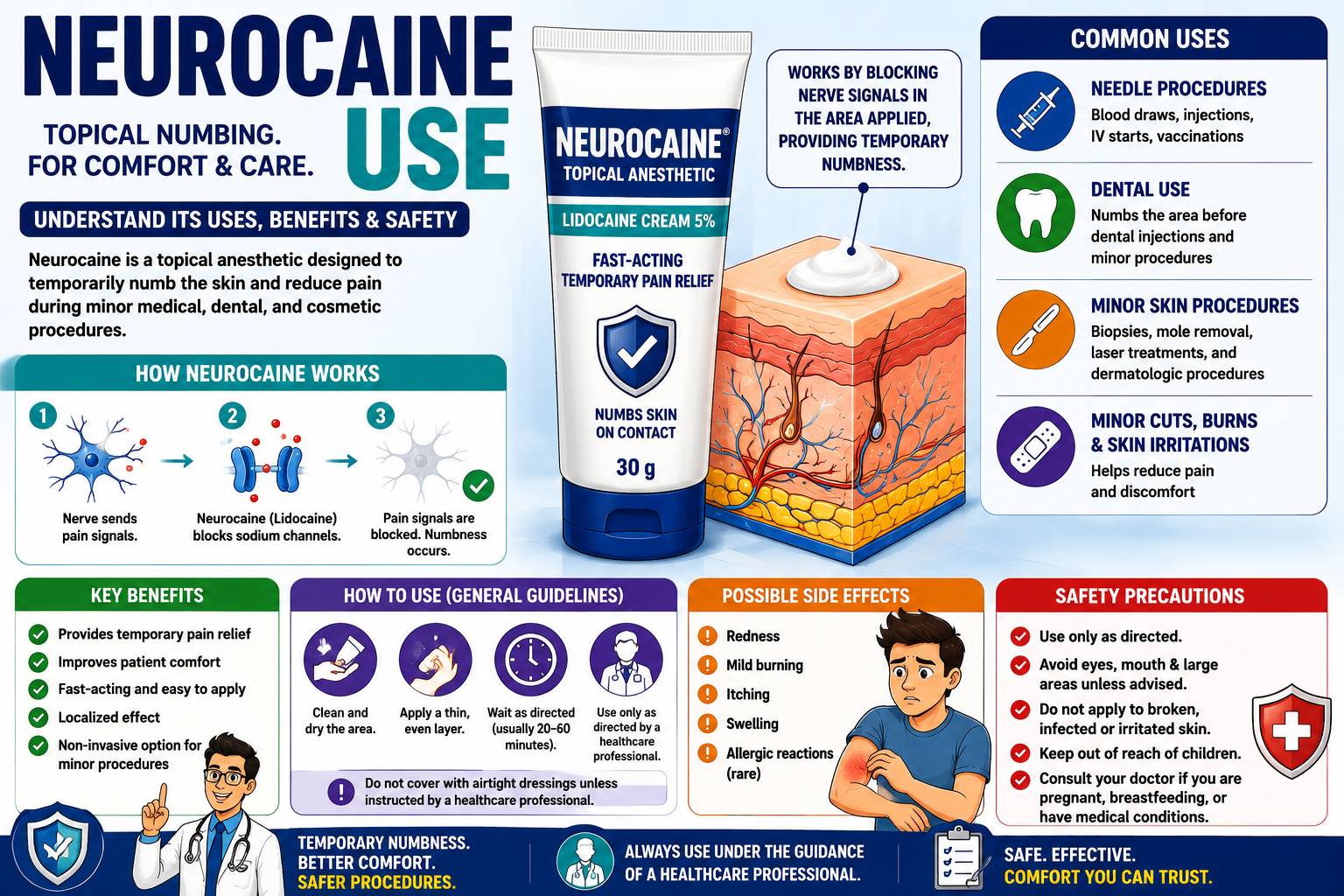
Medical Fields That Use Topical Anesthetics
Healthcare professionals commonly use topical anesthetics in:
- Dermatology
- Dentistry
- Emergency medicine
- Cosmetic medicine
- Plastic surgery
- Pediatrics
- Wound care
Their use helps improve patient comfort during many routine procedures.
Possible Side Effects
Most people tolerate topical anesthetics well when used appropriately.
Possible side effects include:
- Mild redness
- Temporary burning sensation
- Itching
- Skin irritation
- Swelling at the application site
Less commonly, allergic reactions or systemic toxicity can occur if excessive amounts are used or if applied over large areas or damaged skin.
Safety Precautions
To reduce the risk of complications:
- Use only as directed by the product label or healthcare provider.
- Avoid applying to large areas unless specifically instructed.
- Do not apply to severely damaged or infected skin unless medically advised.
- Keep away from the eyes and inside the mouth unless the product is specifically intended for those uses.
- Wash hands after application unless treating the hands themselves.
Who Should Use Extra Caution?
Medical advice is particularly important for:
- Young children
- Older adults
- Pregnant or breastfeeding individuals
- People with liver disease
- Individuals with a known allergy to local anesthetics
- Patients taking medications that may interact with anesthetic agents
How Long Does the Effect Last?
The duration depends on:
- Active ingredient
- Concentration
- Formulation
- Application site
- Individual metabolism
Many topical lidocaine products provide numbness for a limited period after application.
Neurocaine vs Injectable Local Anesthetics
| Topical Neurocaine-Type Products | Injectable Local Anesthetics |
|---|---|
| Applied to the skin or mucosa | Injected beneath the skin |
| Non-invasive | Requires needle administration |
| Best for superficial procedures | Suitable for deeper anesthesia |
| Temporary surface numbness | Deeper tissue anesthesia |
The appropriate option depends on the procedure being performed and clinical judgment.
Frequently Asked Questions
What is Neurocaine used for?
Neurocaine-type topical anesthetics are commonly used to temporarily reduce pain or discomfort during minor medical, cosmetic, or dental procedures.
How does Neurocaine work?
It blocks sodium channels in nerve cells, preventing pain signals from being transmitted.
Is Neurocaine safe?
When used according to directions, topical local anesthetics are generally well tolerated. However, excessive use or application to damaged skin can increase the risk of adverse effects.
Can Neurocaine be used before injections?
Topical anesthetics are commonly used before injections to reduce discomfort associated with needle insertion.
Does Neurocaine permanently block pain?
No. The numbing effect is temporary and gradually wears off as the medication is cleared from the treated tissues.
Conclusion
Neurocaine-type topical anesthetics are valuable tools for improving patient comfort during many medical, dental, and cosmetic procedures. By temporarily blocking nerve conduction at the site of application, these products help reduce pain without affecting overall consciousness.
When used correctly and under appropriate medical guidance, topical anesthetics can provide effective, localized pain relief while maintaining a favorable safety profile. Understanding their mechanism of action, appropriate uses, and precautions helps patients and healthcare professionals use these medications safely and effectively.
