- Your cart is empty
- Continue Shopping


Buy Psychedelic Compounds: Scientific Research, Safety Considerations, and Emerging Areas of Study
- Psychedelics Guide
- Posted on
-
by admin
- 0 comments
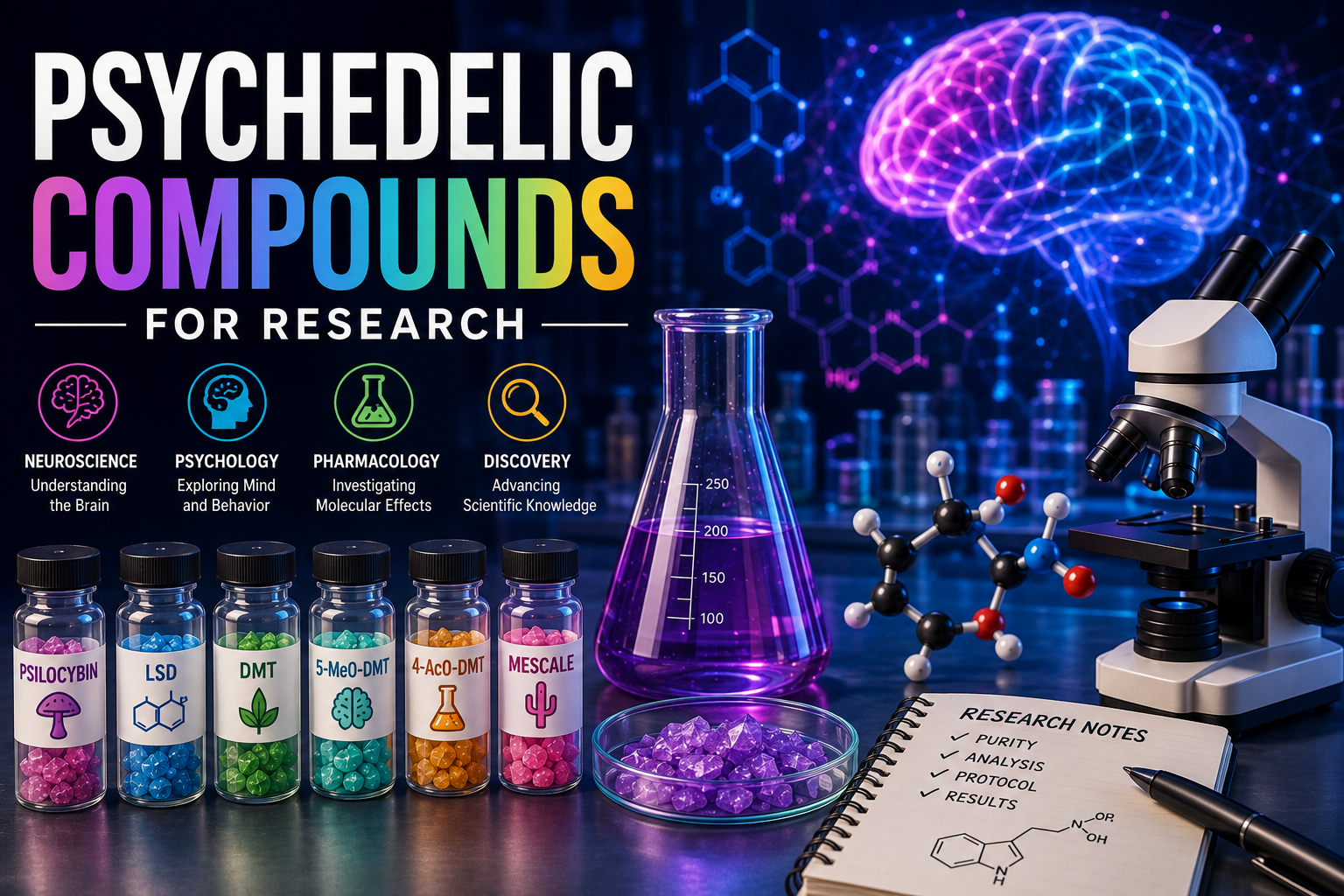
Buy psychedelic compounds has become an important area of scientific investigation, attracting interest from researchers in neuroscience, psychology, pharmacology, and cognitive science. Advances in brain imaging, neurobiology, and data analysis have enabled scientists to explore how these compounds interact with neural networks and influence perception, cognition, and consciousness.
While public discussions often focus on cultural and historical aspects of psychedelics, the scientific community is increasingly interested in understanding the biological mechanisms that underlie their effects. Researchers are investigating how these compounds affect brain connectivity, information processing, and neural plasticity, contributing to a broader understanding of human cognition.
What Are Psychedelic Compounds?
Psychedelic compounds are substances that can significantly alter perception, mood, cognition, and sensory experiences. Scientists study these compounds to better understand:
- Brain function
- Consciousness
- Perception
- Emotional processing
- Learning and memory
- Neural communication
Research focuses on the interaction between these compounds and neurotransmitter systems, particularly serotonin receptors that play a major role in cognition and perception.
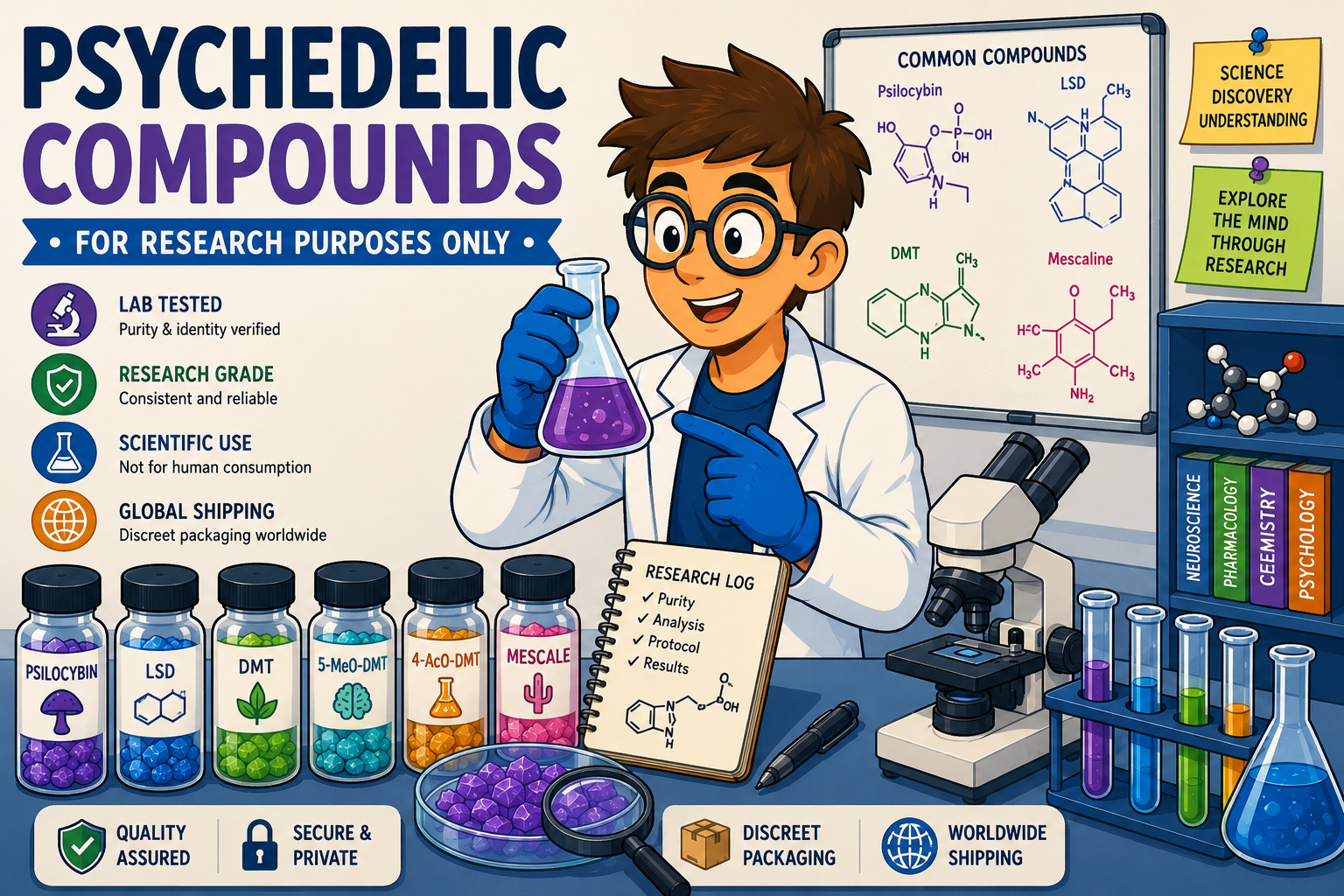
Why Scientists Study Psychedelics
Modern research seeks to answer several fundamental questions:
Understanding Consciousness
Consciousness remains one of science’s most challenging mysteries. Psychedelic compounds provide researchers with unique opportunities to study altered states of awareness and how the brain constructs subjective experience.
Exploring Brain Connectivity
Neuroimaging studies allow scientists to observe how different regions of the brain communicate under various conditions. These findings help researchers understand large-scale neural networks and cognitive function.
Investigating Neuroplasticity
Neuroplasticity refers to the brain’s ability to adapt and form new neural connections. Understanding this process is important for advancing neuroscience and cognitive science.
Major Areas of Research
Neuroscience
Researchers examine how psychedelic compounds affect:
- Neural signaling
- Brain network activity
- Information processing
- Sensory integration
Cognitive Science
Studies investigate:
- Attention
- Memory
- Creativity
- Learning processes
- Decision-making
Pharmacology
Scientists analyze:
- Receptor interactions
- Molecular mechanisms
- Neurotransmitter activity
- Structure-activity relationships
Safety and Ethical Considerations
Scientific investigations involving psychedelic compounds are conducted under strict ethical and regulatory standards. Researchers prioritize:
- Participant safety
- Institutional oversight
- Scientific transparency
- Regulatory compliance
- Evidence-based methodologies
These safeguards help ensure research quality and participant protection.
Future Directions
Emerging technologies are helping researchers explore psychedelic compounds with greater precision than ever before.
Areas of future interest include:
- Advanced brain imaging
- Computational neuroscience
- Artificial intelligence-assisted research
- Precision neuropharmacology
- Consciousness mapping
As scientific understanding grows, researchers continue to uncover new insights into how the brain functions and adapts.
Conclusion
Psychedelic compounds remain an important subject of scientific inquiry. Through rigorous research, scientists are expanding our understanding of the brain, consciousness, cognition, and neurobiology. Continued investigation may contribute valuable knowledge across multiple fields, including neuroscience, psychology, pharmacology, and cognitive science.
As research evolves, the focus remains on advancing scientific understanding through responsible, evidence-based investigation and ethical research practices.
