- Your cart is empty
- Continue Shopping


Academic Institutions: Driving Education, Research, and Global Innovation
- Guides
- Posted on
-
by admin
- 0 comments
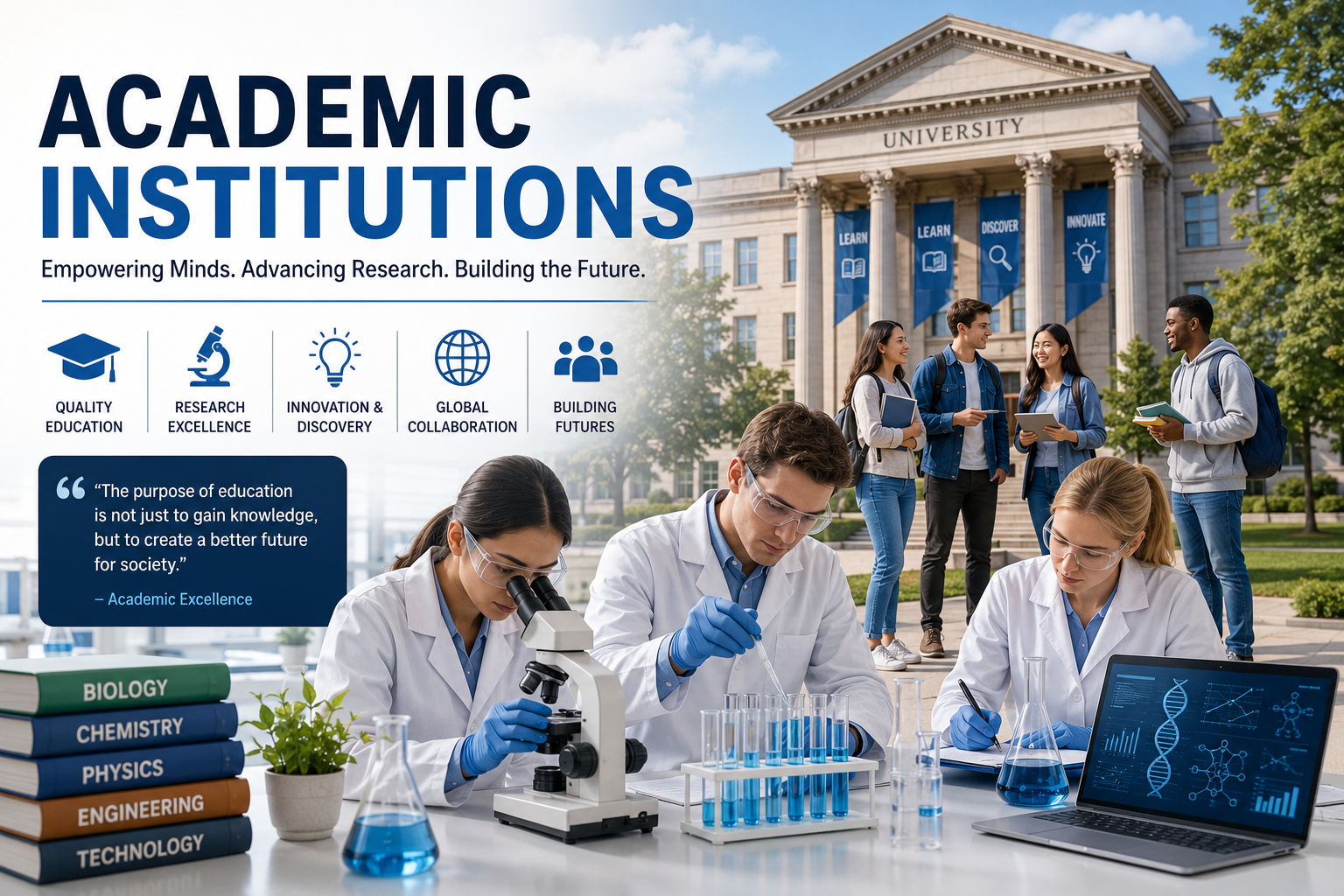
Academic institutions have long served as the foundation of education, scientific discovery, and societal progress. From universities and colleges to specialized research centers and technical institutes, these organizations play a critical role in developing future leaders, advancing knowledge, and addressing some of the world’s most complex challenges.
As global economies become increasingly knowledge-driven, the importance of it continues to grow. They not only educate students but also drive innovation, support groundbreaking research, foster critical thinking, and contribute significantly to economic and technological development.
Today’s rapidly evolving world, it remains at the center of scientific advancement, preparing students and researchers to solve problems, create opportunities, and shape the future.
What Are Academic Institutions?
They are organizations dedicated to education, research, and knowledge creation. They provide structured learning environments where students acquire skills, expertise, and qualifications while contributing to intellectual and professional development.
Common types include:
- Universities
- Colleges
- Research Institutes
- Technical Schools
- Community Colleges
- Professional Training Centers
- Graduate Schools
- Specialized Research Centers
These institutions serve as hubs for learning, collaboration, innovation, and discovery across countless disciplines.
The Role of the in Society
contributes to society in numerous ways beyond classroom education.
Educating Future Professionals
Universities and colleges prepare students for careers in medicine, engineering, business, law, technology, science, education, and countless other fields.
By providing foundational knowledge and practical skills, it help build a qualified workforce capable of meeting evolving industry demands.
Advancing Scientific Research
Many of the world’s most important scientific breakthroughs originate within academic research laboratories.
Researchers at universities investigate:
- Medical treatments
- Biotechnology innovations
- Environmental sustainability
- Renewable energy solutions
- Artificial intelligence
- Advanced materials
- Public health initiatives
Academic research drives discoveries that improve quality of life and support long-term societal development.
Promoting Critical Thinking
Higher education encourages students to analyze information, evaluate evidence, and develop independent perspectives.
These critical-thinking skills are essential for innovation, leadership, and informed decision-making in both professional and personal contexts.
Academic Institutions and Scientific Innovation
Innovation often begins within academic environments where researchers have the freedom to explore new ideas and test emerging theories.
Contribute to innovation through:
Basic Research
Basic research seeks to expand knowledge without immediate commercial objectives.
Although fundamental in nature, these discoveries often form the basis for future technological and scientific advancements.
Applied Research
Applied research focuses on solving practical problems and developing solutions that can be implemented in real-world settings.
Collaborative Research Programs
Universities frequently partner with government agencies, healthcare organizations, and private industry to address global challenges through collaborative research initiatives.
Research Infrastructure and Laboratory Excellence
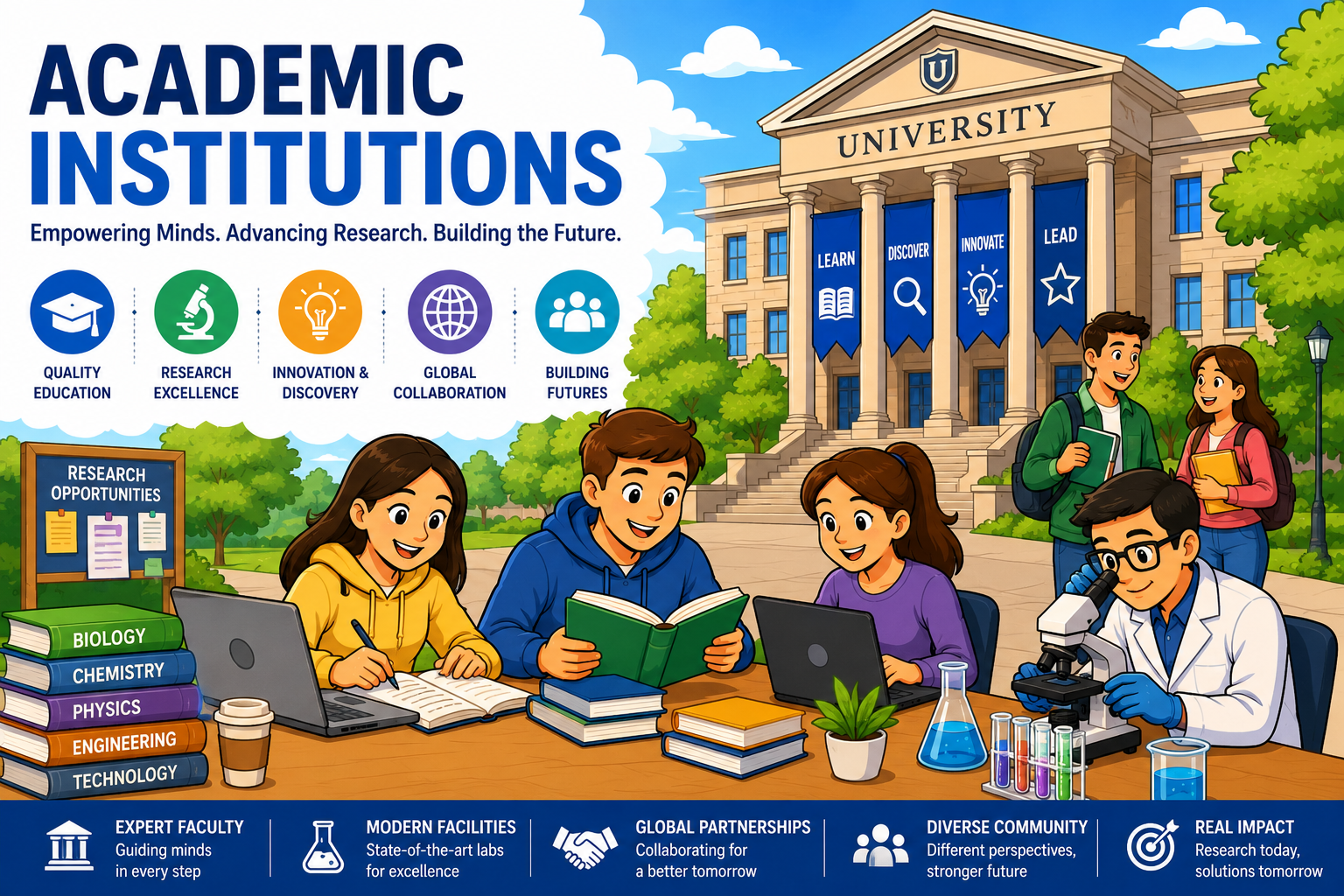
Modern academic institutions invest heavily in research infrastructure.
State-of-the-art facilities may include:
- Advanced laboratories
- Analytical testing centers
- Biotechnology facilities
- Engineering research centers
- Computer science laboratories
- Environmental research stations
- Medical research facilities
Access to sophisticated equipment and high-quality research resources enables researchers to conduct accurate and impactful studies.
The Importance of Research Materials and Laboratory Resources
Scientific progress depends on reliable research tools and materials.
Academic researchers utilize:
- Laboratory reagents
- Analytical reference standards
- Research chemicals
- Biological materials
- Testing instruments
- Data analysis platforms
High-quality laboratory resources support reproducibility, data accuracy, and scientific integrity throughout the research process.
Academic Institutions and Global Collaboration
Today’s scientific challenges often require international cooperation.
Academic institutions participate in:
- Joint research projects
- International conferences
- Student exchange programs
- Collaborative publications
- Global innovation networks
These partnerships help accelerate discovery by combining expertise from diverse disciplines and geographic regions.
Technology Transforming Higher Education
Digital transformation continues to reshape it worldwide.
Key technological advancements include:
Online Learning Platforms
Remote education provides students with greater flexibility and accessibility.
Artificial Intelligence
AI-powered tools assist with data analysis, personalized learning, and research optimization.
Virtual Laboratories
Digital simulation technologies allow students to gain practical experience in controlled virtual environments.
Big Data Research
Advanced analytics enable researchers to process vast amounts of information and uncover valuable insights.
These technologies enhance educational quality while expanding research capabilities.
Challenges Facing Academic Institutions
Despite their importance, it face several ongoing challenges.
Funding Constraints
Many institutions must balance educational priorities with limited financial resources.
Research Competition
Increasing competition for grants and funding can affect research productivity.
Rapid Technological Change
Universities must continuously update curricula and infrastructure to remain relevant.
Accessibility and Affordability
Expanding access to quality education remains a priority for institutions worldwide.
Addressing these challenges is essential for maintaining academic excellence and research leadership.
Sustainability and Social Responsibility
Are increasingly recognizing their role in promoting sustainability and social impact.
Initiatives often focus on:
- Environmental research
- Renewable energy programs
- Sustainable campus operations
- Community engagement
- Social innovation
- Public policy development
These efforts contribute to long-term societal well-being while preparing students to become responsible global citizens.
The Future of Academic Institutions
The future of higher education will likely be shaped by innovation, collaboration, and technology.
Emerging trends include:
- Hybrid learning models
- AI-enhanced education
- Global research partnerships
- Interdisciplinary programs
- Advanced scientific infrastructure
- Personalized learning experiences
Institutions that embrace these developments will be better positioned to prepare students for future careers and contribute to scientific advancement.
Why Academic Institutions Matter More Than Ever
In an era defined by rapid technological progress, global challenges, and expanding knowledge, academic institutions remain indispensable.
They educate future generations, drive innovation, support evidence-based decision-making, and create opportunities for social and economic advancement.
From scientific research and technological development to public policy and healthcare improvements, it influences nearly every aspect of modern life.
Conclusion
It serve as the cornerstone of education, research, and innovation. Through teaching, scientific discovery, and global collaboration, they continue to shape the future while addressing the challenges of today.
As society becomes increasingly dependent on knowledge and innovation, the role of academic institutions will only grow in importance. Their commitment to learning, research excellence, and societal progress ensures they remain essential drivers of human advancement for generations to come.
