- Your cart is empty
- Continue Shopping


Chemical Manufacturing: Industrial Chemical Production, Innovation & Sustainable Solutions
- Guides
- Posted on
-
by admin
- 0 comments
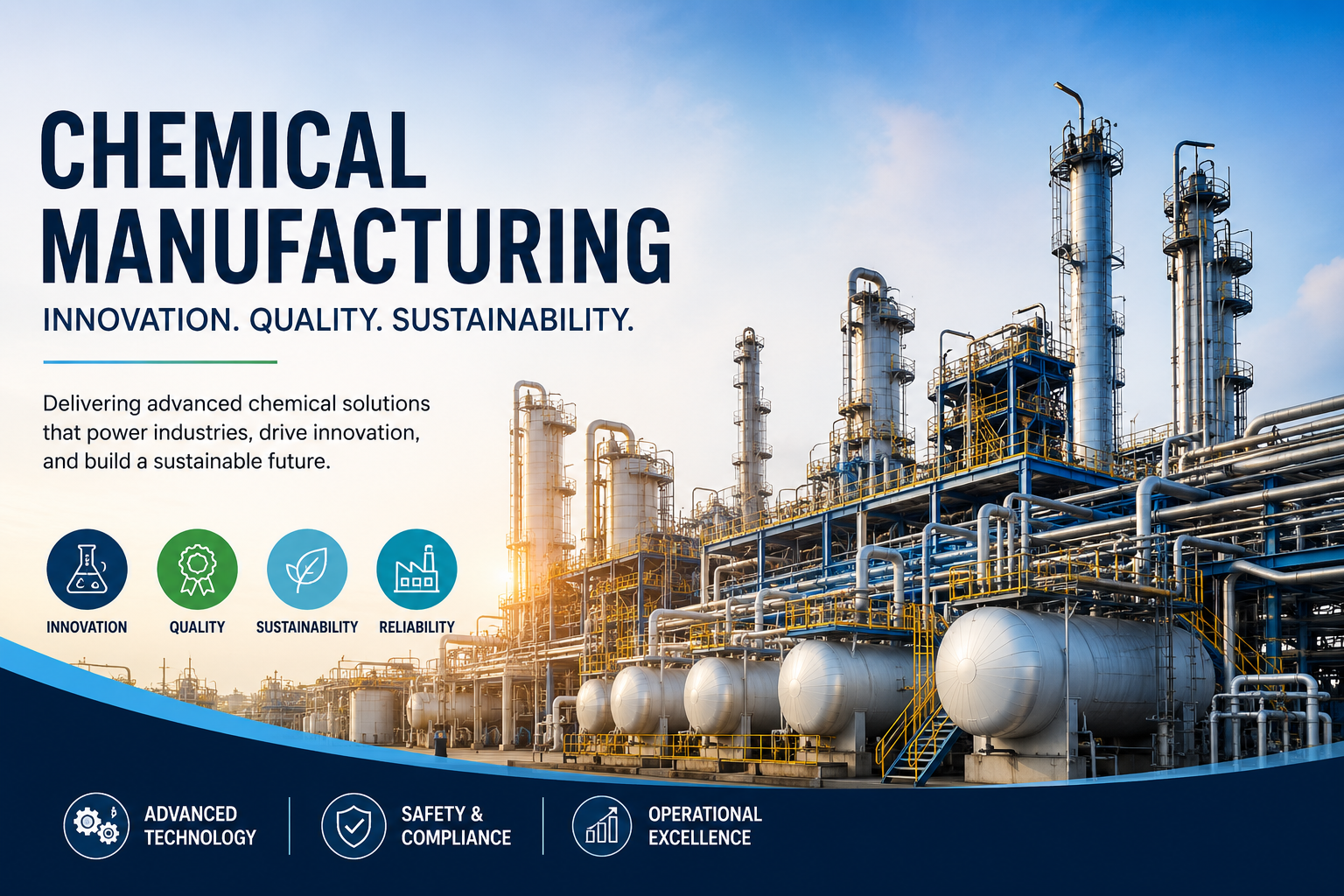
Chemical manufacturing is one of the most important industries in the global economy. From the medicines that save lives to the fertilizers that increase food production and the materials used in construction, electronics, and transportation, it serves as the foundation for countless industries worldwide.
Every day, billions of people rely on products created through advanced processes, often without realizing the critical role these products play in their lives. Whether it’s clean drinking water, life-saving pharmaceuticals, automotive components, household cleaning products, or renewable energy technologies, it remains at the center of modern innovation and economic development.
As industries continue to evolve, chemical manufacturers are embracing advanced technologies, sustainability initiatives, automation, and strict quality control systems to meet growing global demand while reducing environmental impact.
What Is Chemical Manufacturing?
It refers to the industrial-scale production of chemicals and chemical-based products through various physical and chemical processes. These operations involve transforming raw materials into valuable products used across multiple sectors.
The industry encompasses a wide range of products, including:
- Industrial chemicals
- Pharmaceutical ingredients
- Agricultural chemicals
- Specialty chemicals
- Petrochemicals
- Consumer products
- Food additives
- Water treatment chemicals
- Performance materials
- Laboratory chemicals
It combines chemistry, engineering, quality control, and supply chain management to produce products that meet strict performance and safety standards.
The Importance of Chemical Manufacturing
The global economy depends heavily on chem manufacturing because it supports nearly every major industrial sector.
Healthcare and Pharmaceuticals
Chem manufacturing enables the production of:
- Active pharmaceutical ingredients (APIs)
- Medical devices
- Diagnostic materials
- Hospital disinfectants
- Drug formulations
Without advanced manufacturing capabilities, modern healthcare systems would struggle to provide essential treatments and medicines.
Agriculture
Chemical manufacturers play a critical role in food production by supplying:
- Fertilizers
- Crop protection products
- Soil conditioners
- Plant growth regulators
These products help farmers improve crop yields and support global food security.
Construction
The construction industry relies on:
- Adhesives
- Sealants
- Paints and coatings
- Insulation materials
- Concrete additives
These materials improve building durability, energy efficiency, and structural performance.
Energy Sector
Chemicals manufacturing supports both traditional and renewable energy industries through:
- Battery materials
- Solar panel components
- Lubricants
- Fuel additives
- Hydrogen production technologies
The transition toward cleaner energy systems is creating new opportunities for innovative chemical manufacturers worldwide.
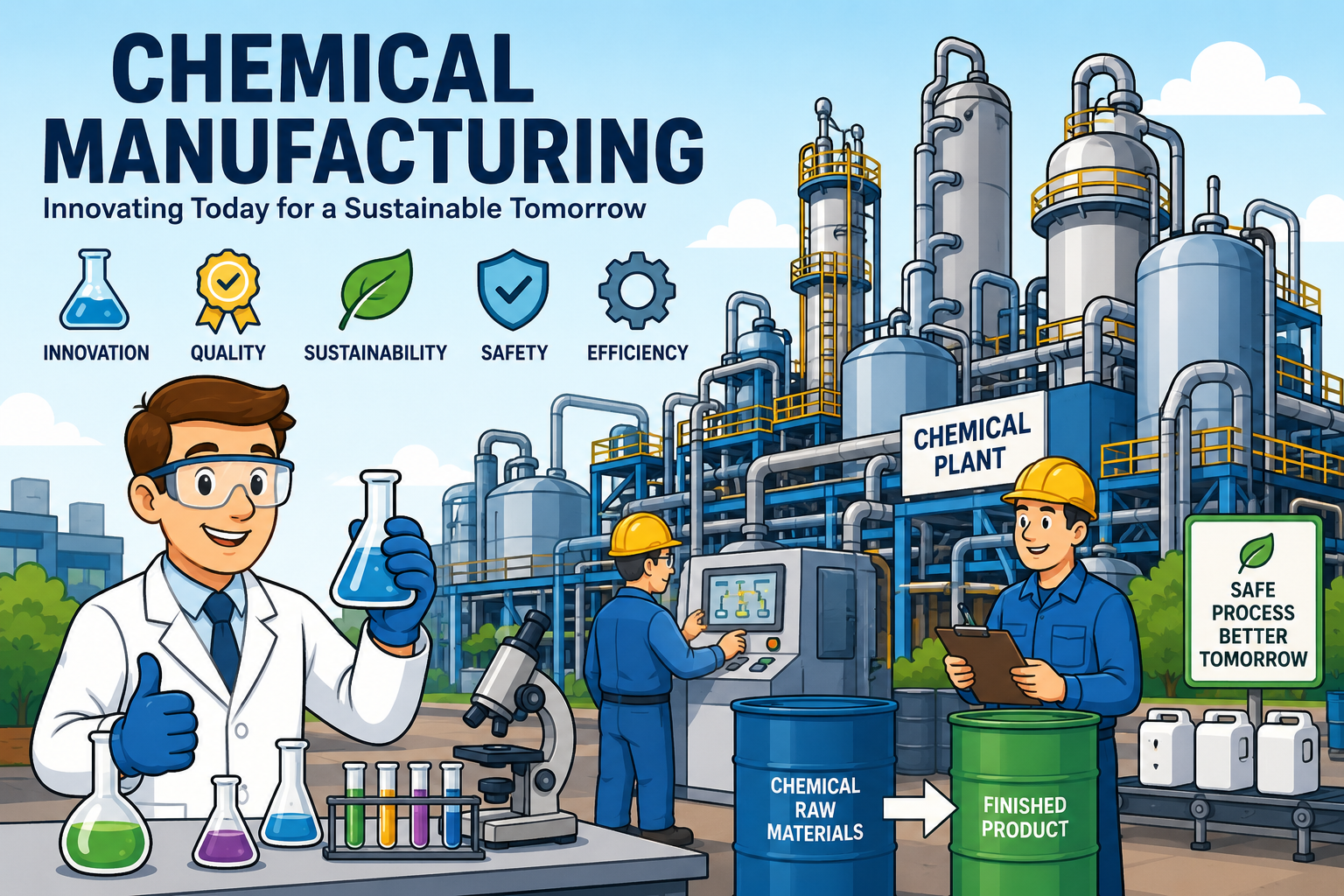
Key Chemical Manufacturing Processes
Modern chem manufacturing utilizes various production techniques depending on the desired product and industry requirements.
Batch Manufacturing
Batch processing involves producing chemicals in specific quantities before cleaning and preparing equipment for the next production cycle.
Advantages include:
- Greater flexibility
- Easier quality control
- Suitable for specialty chemicals
- Ideal for pharmaceuticals
Continuous Manufacturing
Continuous manufacturing involves uninterrupted production processes that operate around the clock.
Benefits include:
- Increased efficiency
- Lower production costs
- Consistent product quality
- Reduced waste generation
Many large-scale chemical plants rely on continuous manufacturing systems to maximize productivity.
Mixing and Blending
Mixing and blending processes combine multiple ingredients to create uniform chemical formulations.
Applications include:
- Coatings
- Cleaning products
- Industrial formulations
- Specialty chemicals
Reaction Engineering
Chemical reactions form the foundation of many manufacturing operations.
These processes involve:
- Temperature control
- Pressure regulation
- Catalyst utilization
- Reaction optimization
Proper reaction management ensures product consistency and safety.
Types of Chemicals Produced
Commodity Chemicals
Commodity chemicals are produced in large volumes and serve as building blocks for many industries.
Examples include:
- Sulfuric acid
- Ammonia
- Chlorine
- Methanol
- Ethylene
These chemicals are essential for manufacturing numerous downstream products.
Specialty Chemicals
Specialty chemicals are designed for specific performance applications.
Examples include:
- Electronic chemicals
- Water treatment chemicals
- Coatings additives
- Performance polymers
- Cosmetic ingredients
Specialty chemicals often command higher profit margins due to their unique functionalities.
Fine Chemicals
Fine chemicals are highly purified substances manufactured in smaller quantities.
Applications include:
- Pharmaceuticals
- Biotechnology
- Research laboratories
- Advanced materials
These products require stringent quality standards and sophisticated manufacturing processes.
Quality Control in Chemical Manufacturing
Quality control is a critical component of its operations.
Manufacturers implement rigorous testing procedures to ensure products meet specifications for:
- Purity
- Stability
- Performance
- Safety
- Regulatory compliance
Quality assurance programs typically include:
Raw Material Testing
Incoming materials undergo inspection before entering production processes.
In-Process Monitoring
Continuous monitoring helps identify deviations and maintain product consistency.
Final Product Verification
Finished products undergo comprehensive testing before shipment to customers.
Advanced laboratories utilize sophisticated analytical instruments such as:
- Gas chromatography
- Liquid chromatography
- Spectroscopy systems
- Mass spectrometry
- Particle size analyzers
These technologies ensure accurate and reliable quality assessments.
Regulatory Compliance and Safety
It operates within a highly regulated environment designed to protect workers, consumers, and the environment.
Key compliance areas include the following:
Workplace Safety
Manufacturers implement safety programs covering:
- Employee training
- Hazard communication
- Protective equipment
- Emergency response procedures
Environmental Protection
Chemical facilities must manage:
- Emissions
- Waste streams
- Water usage
- Energy consumption
Product Stewardship
Responsible manufacturers evaluate the entire product lifecycle to minimize risks and maximize sustainability.
Compliance with international standards demonstrates commitment to quality and safety.
Sustainability in Chemical Manufacturing
Sustainability has become a major priority across the chemical industry.
Manufacturers are investing in technologies that reduce environmental impact while improving operational efficiency.
Green Chemistry
Green chemistry focuses on designing processes that:
- Reduce hazardous substances
- Minimize waste
- Improve resource efficiency
- Lower energy consumption
Renewable Feedstocks
Companies are increasingly exploring renewable raw materials derived from:
- Biomass
- Agricultural waste
- Plant-based resources
Circular Economy Initiatives
Many manufacturers are adopting circular economy strategies by:
- Recycling materials
- Recovering valuable resources
- Reducing landfill waste
- Extending product lifecycles
These initiatives support long-term environmental and economic sustainability.
Technology Transforming Chemical Manufacturing
Digital transformation is reshaping its landscape.
Automation
Automated systems improve:
- Process consistency
- Productivity
- Safety
- Quality control
Artificial Intelligence
AI technologies help manufacturers:
- Predict equipment failures
- Optimize production schedules
- Improve quality management
- Reduce operating costs
Industrial Internet of Things (IIoT)
Connected sensors provide real-time insights into:
- Equipment performance
- Production efficiency
- Energy consumption
- Maintenance requirements
Advanced Analytics
Data-driven decision-making allows manufacturers to identify opportunities for process improvement and cost reduction.
Choosing a Reliable Chemical Manufacturing Partner
Businesses seeking manufacturing services should evaluate potential partners based on several important criteria.
Manufacturing Expertise
Look for companies with proven experience in:
- Process development
- Scale-up operations
- Quality assurance
- Regulatory compliance
Quality Standards
Reliable manufacturers maintain robust quality management systems and provide comprehensive documentation.
Production Capacity
Evaluate whether the manufacturer can support current and future production requirements.
Technical Support
Strong technical expertise helps customers overcome challenges and accelerate product development.
Supply Chain Reliability
Consistent sourcing and logistics capabilities ensure uninterrupted product availability.
Future Trends in Chemical Manufacturing
Several emerging trends are expected to shape the future of the chemical industry.
Sustainable Production Technologies
Environmental responsibility will continue driving investment in cleaner manufacturing processes.
Smart Manufacturing
Digital technologies will enable greater efficiency, flexibility, and predictive capabilities.
Advanced Materials
Demand for innovative materials in electronics, renewable energy, aerospace, and healthcare will create new growth opportunities.
Localization of Supply Chains
Many companies are diversifying supply networks to improve resilience and reduce disruptions.
Increased Research and Development
Innovation will remain a key competitive advantage for chemical manufacturers seeking to meet evolving market needs.
Conclusion
Chemical manufacturing remains one of the most essential industries in the modern world. It powers innovation across healthcare, agriculture, construction, energy, technology, and countless other sectors that drive economic growth and improve quality of life.
As sustainability, automation, and advanced technologies continue transforming the industry, chemical manufacturers are positioned to play an even greater role in solving global challenges and supporting future development. Companies that invest in quality, innovation, environmental stewardship, and operational excellence will lead the next generation of industrial progress.
Whether producing commodity chemicals, specialty formulations, or advanced materials, it will continue serving as a cornerstone of global industry and technological advancement for decades to come.
