- Your cart is empty
- Continue Shopping

Andractim DHT Cream and Muscle Development: Understanding the Science Behind DHT and Lean Muscle Growth
- Guides
- Posted on
-
by admin
- 0 comments
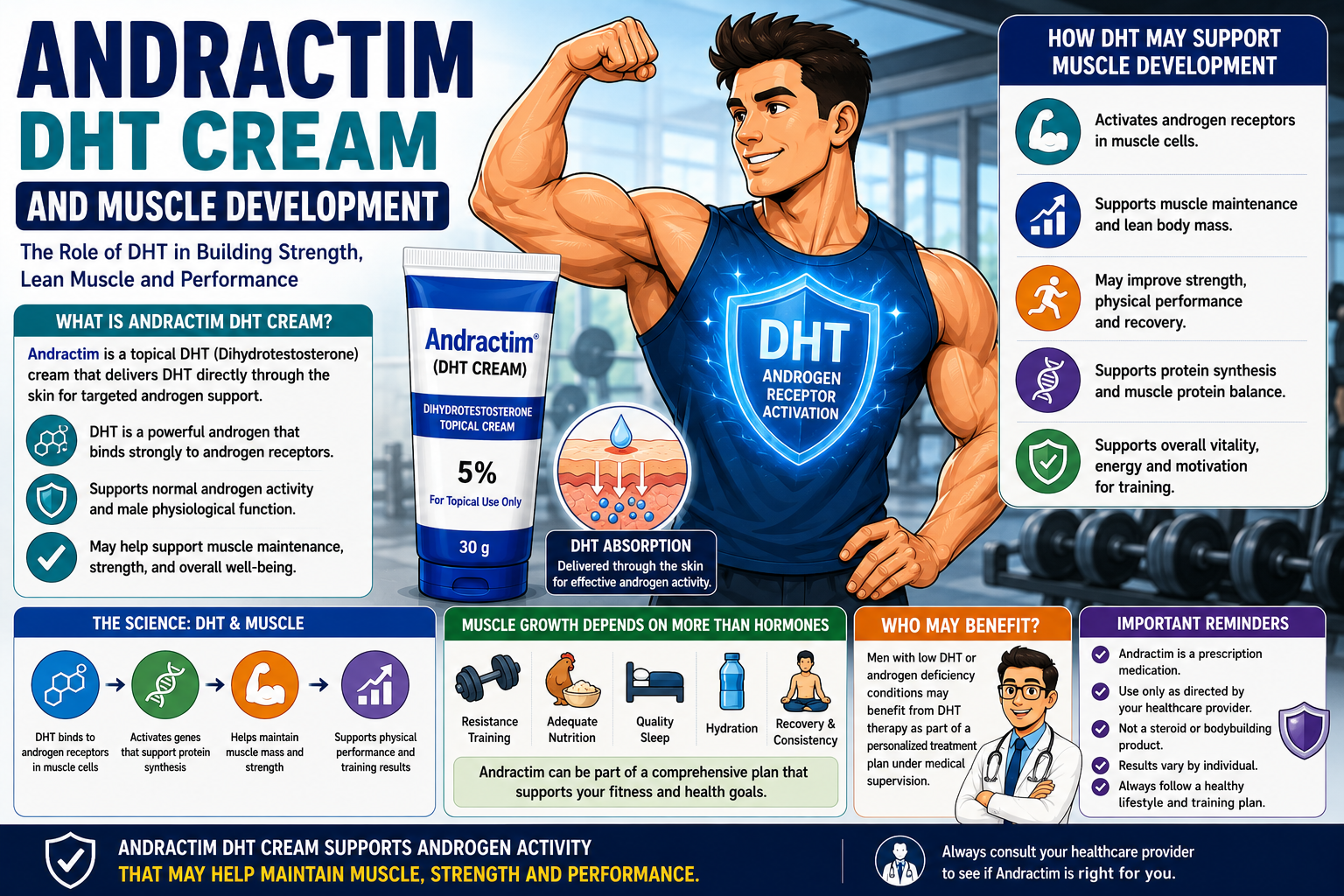
Andractim DHT Cream and Muscle Development
Muscle development depends on a combination of resistance training, proper nutrition, recovery, genetics, and hormonal balance. Among the hormones involved in muscle physiology, testosterone is widely recognized, but its potent metabolite, dihydrotestosterone (DHT), also plays an important role in androgen signaling.
Because Andractim® contains dihydrotestosterone (DHT) delivered through a topical gel, many people ask whether it can influence muscle growth or physical performance.
The answer requires understanding how DHT differs from testosterone. While DHT is a powerful androgen that strongly activates androgen receptors, current evidence does not demonstrate that topical DHT therapy alone is a muscle-building treatment comparable to resistance training or that it independently produces large increases in muscle mass. Instead, DHT may contribute to normal androgen function, muscle maintenance, and overall well-being in appropriately selected patients receiving medical care.
What Is Andractim DHT Cream?
Andractim is a topical gel containing dihydrotestosterone (androstanolone), one of the body’s most potent natural androgens.
After application to the skin, DHT is absorbed into the bloodstream where it binds directly to androgen receptors. Unlike testosterone, DHT:
- Does not require activation
- Binds androgen receptors with high affinity
- Cannot be converted into estrogen (aromatized)
These characteristics make DHT pharmacologically distinct from testosterone replacement therapy (TRT).
How Muscles Grow
Muscle hypertrophy occurs when muscle fibers adapt to repeated mechanical loading.
This process depends on:
- Progressive resistance exercise
- Adequate protein intake
- Recovery and sleep
- Energy balance
- Hormonal signaling
Several hormones contribute to muscle adaptation, including:
- Testosterone
- Growth hormone
- Insulin-like Growth Factor-1 (IGF-1)
- Insulin
- Cortisol (catabolic regulation)
Androgens influence protein synthesis and muscle maintenance by activating androgen receptors within skeletal muscle tissue.
What Role Does DHT Play in Muscle Development?
DHT contributes to androgen signaling by binding strongly to androgen receptors.
Researchers believe DHT may support:
Androgen Receptor Activation
DHT has a higher affinity for androgen receptors than testosterone, leading to potent androgenic signaling in responsive tissues.
Muscle Maintenance
Adequate androgen activity helps preserve lean body mass, particularly in individuals with androgen deficiency.
Strength and Physical Function
Normal androgen status contributes to:
- Muscle strength
- Physical performance
- Functional capacity
- Mobility
However, DHT’s role appears to be more closely related to supporting normal androgen function rather than directly driving substantial muscle hypertrophy on its own.
Does Andractim Increase Muscle Mass?
Current clinical evidence does not show that topical DHT gel alone reliably produces large increases in muscle size in healthy individuals.
Instead, available research indicates that transdermal DHT may:
- Improve androgen status in men with deficiency
- Support sexual function
- Improve certain markers of well-being
- Increase total androgen exposure within physiological ranges
There is limited evidence demonstrating that Andractim by itself causes significant gains in lean muscle mass without appropriate training and nutrition.
DHT vs Testosterone for Muscle Development
Although DHT is more potent at the androgen receptor, testosterone and DHT serve different physiological roles.
| Feature | Testosterone | DHT |
|---|---|---|
| Supports muscle protein synthesis | Yes | Contributes through androgen signaling |
| Converts to estrogen | Yes | No |
| Binds androgen receptors | High affinity | Very high affinity |
| Primary hormone for TRT | Yes | No |
| Directly studied for muscle-building | Extensive evidence | Limited evidence |
Testosterone remains the hormone with the strongest evidence for improving lean body mass in men with clinically low testosterone under medical supervision. DHT contributes to androgenic effects but has not been shown to replace the broader physiological role of testosterone in muscle development.
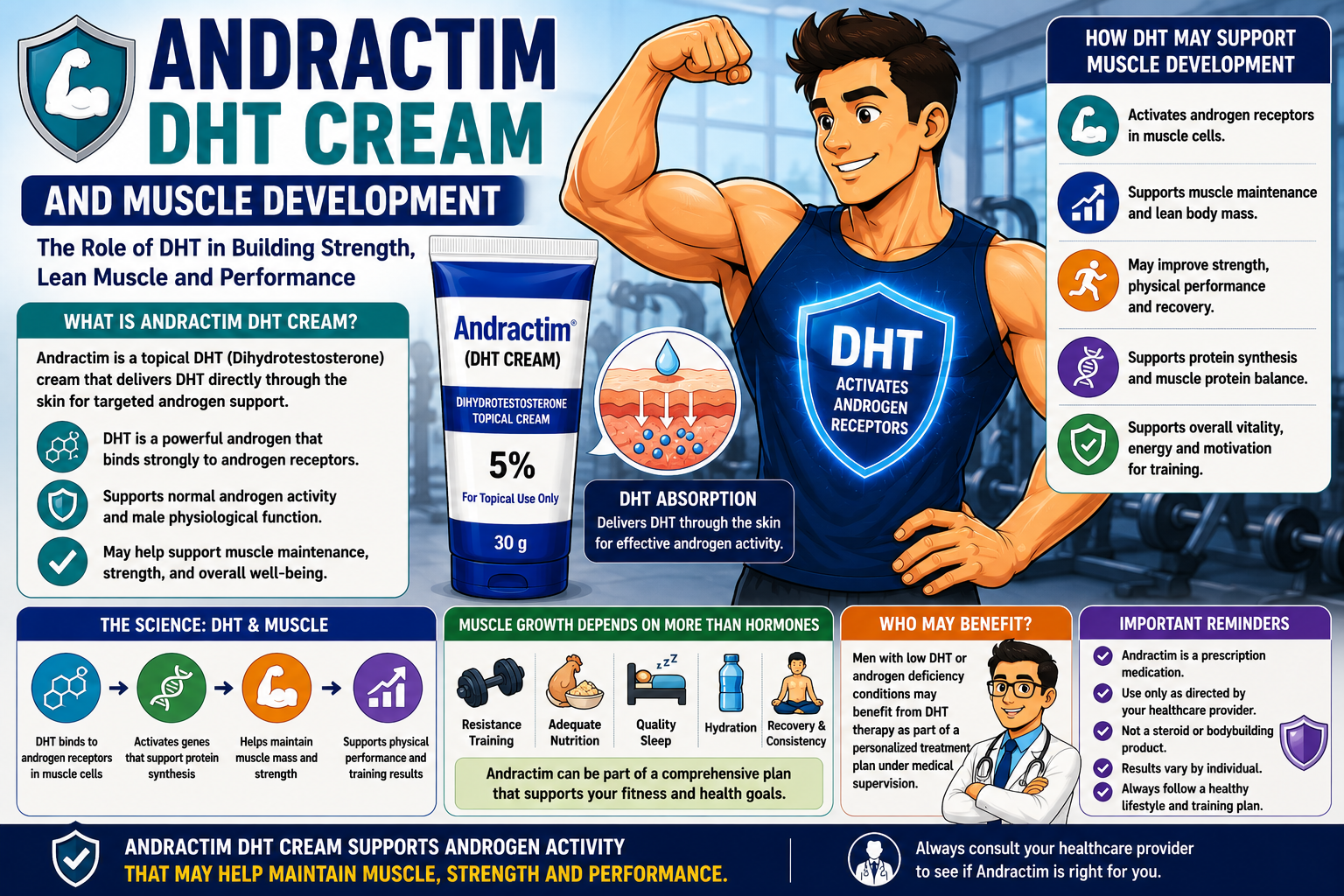
Can Andractim Improve Strength?
Some individuals receiving androgen replacement therapy report improvements in:
- Energy
- Motivation
- Libido
- Physical function
- Exercise tolerance
These improvements may indirectly support better training consistency.
However, muscle strength gains still depend primarily on:
- Progressive overload
- Resistance exercise
- Nutrition
- Recovery
Factors That Influence Muscle Development
Regardless of hormone status, muscle growth requires multiple supporting factors.
Resistance Training
Progressive strength training remains the most effective stimulus for hypertrophy.
Adequate Protein Intake
Dietary protein supplies amino acids needed for muscle repair and growth.
Recovery
Muscles grow during recovery rather than during exercise itself.
Sleep
Sleep supports hormonal regulation and muscle protein synthesis.
Hormonal Balance
Healthy androgen levels help maintain muscle mass and physical performance.
Potential Benefits of Andractim
Clinical studies investigating transdermal DHT therapy have reported improvements in selected androgen-related outcomes.
Potential benefits include:
- Improved libido
- Better sexual function
- Enhanced androgen activity
- Increased energy in androgen-deficient individuals
- Maintenance of lean body composition in appropriate clinical settings
These effects should not be interpreted as evidence that Andractim is a dedicated muscle-building therapy.
Possible Side Effects
Like other androgen therapies, Andractim may cause adverse effects.
Potential side effects include:
- Acne
- Oily skin
- Increased body hair growth
- Mood changes
- Local skin irritation
- Hair loss in genetically susceptible individuals
- Weight changes when androgen levels increase excessively
Most side effects are dose-related and should be monitored by a healthcare professional.
Current Research
Research involving transdermal DHT has primarily focused on:
- Androgen replacement
- Sexual function
- Micropenis treatment in pediatric endocrinology
- Gynecomastia
- Endocrine disorders
While these studies support the effectiveness of topical DHT for selected medical indications, evidence specifically demonstrating substantial increases in skeletal muscle mass remains limited.
Frequently Asked Questions
Does Andractim build muscle?
Current evidence does not support Andractim as a standalone muscle-building treatment. Muscle growth primarily depends on resistance training, adequate nutrition, and overall hormonal health.
Is DHT stronger than testosterone?
DHT binds androgen receptors more strongly than testosterone, but testosterone has broader physiological roles, including supporting muscle protein synthesis and reproductive function.
Can DHT improve athletic performance?
Normal androgen function may contribute to strength and physical performance, but no high-quality evidence shows that topical DHT alone substantially enhances athletic performance in healthy individuals.
Is Andractim used by athletes?
Androgen therapies are regulated in competitive sports. Athletes should comply with the rules of their governing organizations before using any hormone therapy.
Conclusion
Andractim DHT Cream provides direct delivery of dihydrotestosterone, a potent natural androgen that plays an important role in androgen receptor signaling and male physiology. While DHT contributes to muscle maintenance, strength, and overall androgen activity, current scientific evidence does not support the idea that Andractim alone produces substantial muscle growth.
For individuals with medically diagnosed androgen deficiency, topical DHT may form part of a comprehensive treatment plan under professional supervision. However, optimal muscle development continues to depend on structured resistance training, balanced nutrition, adequate recovery, and individualized medical care rather than hormone therapy alone.
