- Your cart is empty
- Continue Shopping


Andractim and Its Impact on Bone Health: Understanding DHT, Bone Density, and Skeletal Strength
- Guides
- Posted on
-
by admin
- 0 comments
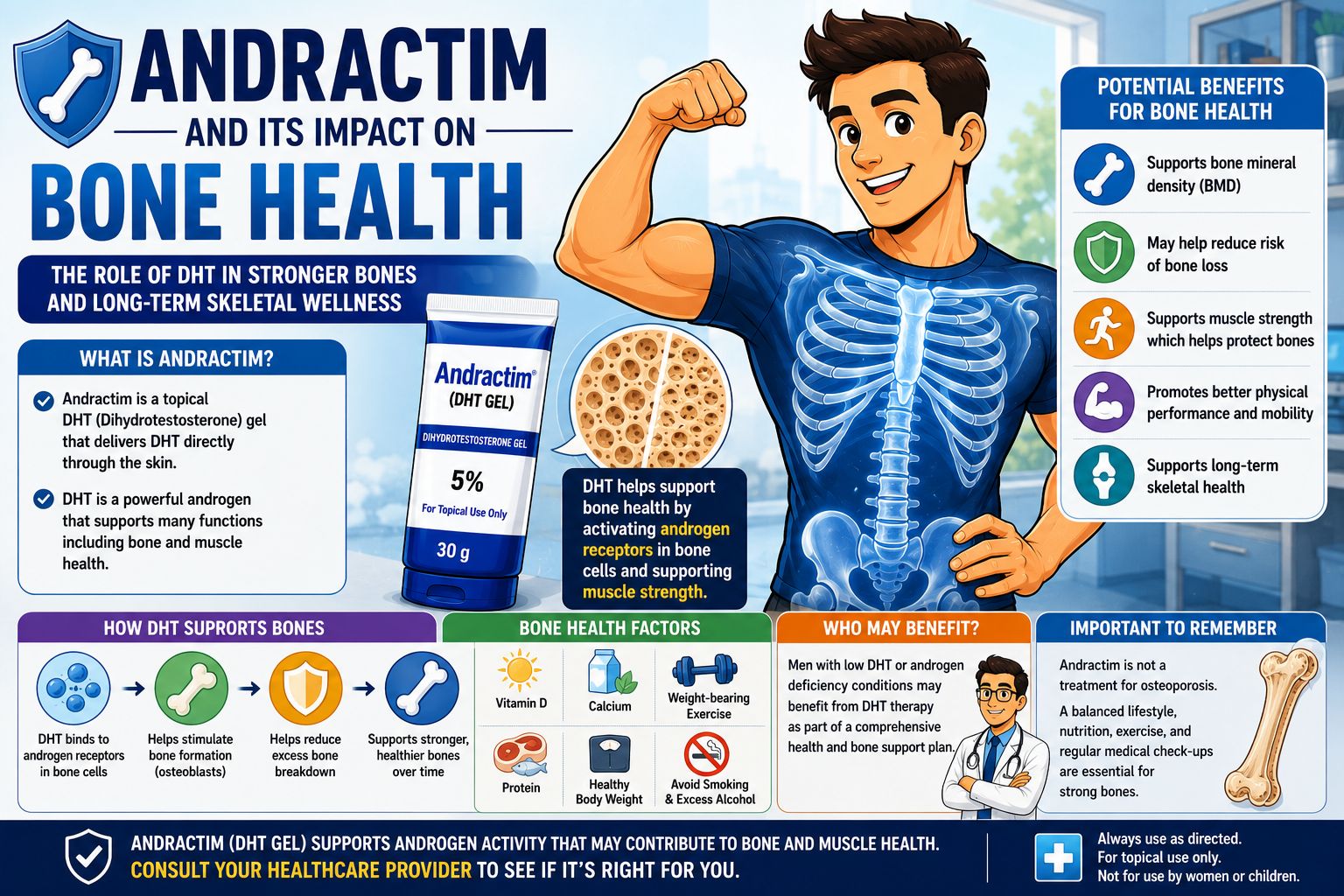
Meta Title: Andractim and Its Impact on Bone Health | DHT, Bone Density & Osteoporosis
Meta Description: Learn how Andractim (DHT Gel) may influence bone health, bone mineral density, testosterone pathways, osteoporosis risk, and overall skeletal health. Evidence-based guide on DHT and bone metabolism.
Andractim and Its Impact on Bone Health
Healthy bones are essential for mobility, strength, posture, and overall quality of life. While calcium and vitamin D often receive the most attention, hormones also play a crucial role in maintaining bone strength throughout life. Among these hormones, testosterone and its active metabolite dihydrotestosterone (DHT) contribute to normal skeletal development and the maintenance of bone tissue.
Because Andractim® is a topical DHT (dihydrotestosterone) gel, many patients ask whether it has any effect on bone health, bone mineral density (BMD), or osteoporosis risk.
The answer is complex. Andractim delivers DHT directly to the body, but DHT is only one component of the hormonal network involved in bone metabolism. Current research suggests that DHT participates in maintaining musculoskeletal health, but bone health also depends on testosterone, estrogen, nutrition, physical activity, genetics, and aging.
This guide explains the relationship between Andractim, DHT, testosterone, and bone health while reviewing current scientific evidence.
What Is Andractim?
Andractim is a topical gel containing dihydrotestosterone (DHT), a potent androgen naturally produced from testosterone by the enzyme 5-alpha reductase.
Unlike testosterone replacement therapy (TRT), Andractim delivers active DHT directly through the skin.
Once absorbed, DHT binds strongly to androgen receptors located throughout the body, including tissues involved in:
- Muscle maintenance
- Sexual development
- Skin
- Hair follicles
- Bone cells
Because DHT cannot be converted into estrogen, its physiological effects differ from those of testosterone.
Why Bone Health Matters
Bone is living tissue that undergoes continuous remodeling.
Throughout life, specialized cells constantly:
- Build new bone
- Remove damaged bone
- Repair microscopic injuries
- Maintain mineral balance
When this remodeling process becomes unbalanced, bone density declines, increasing the risk of:
- Osteopenia
- Osteoporosis
- Fragility fractures
- Reduced mobility
Hormones are among the primary regulators of this remodeling process.
The Role of Hormones in Bone Health
Several hormones contribute to healthy bones.
Testosterone
Testosterone supports:
- Bone formation
- Muscle strength
- Physical activity
- Bone mineral density
Low testosterone has been associated with reduced BMD in some men, particularly those with hypogonadism. Testosterone replacement therapy may improve BMD in selected patients, although current evidence does not show that TRT alone clearly reduces fracture risk.
Dihydrotestosterone (DHT)
DHT is the most potent naturally occurring androgen.
Researchers believe DHT contributes to:
- Skeletal maintenance
- Muscle support
- Mechanical loading of bone
- Androgen receptor signaling within bone tissue
Observational studies have found that higher endogenous DHT levels are associated with a lower risk of hip fracture in older men, although DHT has not consistently been linked to higher bone mineral density itself.
Estrogen
Although often considered a female hormone, estrogen is also essential for male bone health.
In men, some testosterone is converted into estrogen through aromatase.
Estrogen plays a major role in:
- Bone remodeling
- Calcium regulation
- Prevention of excessive bone resorption
How Andractim May Influence Bone Health
Because Andractim supplies DHT rather than testosterone, its effects on bone differ from conventional testosterone therapy.
Potential mechanisms include:
Androgen Receptor Activation
Bone cells contain androgen receptors.
DHT binding may influence cellular signaling involved in skeletal maintenance.
Improved Muscle Function
Healthy muscles place mechanical stress on bones.
Maintaining muscle mass may indirectly help preserve bone strength through regular loading and physical activity.
Support for Physical Performance
Higher activity levels are associated with healthier bones because weight-bearing exercise stimulates bone remodeling.
Can Andractim Increase Bone Mineral Density?
Current evidence does not show that DHT gel alone consistently increases bone mineral density.
Most clinical evidence demonstrating improvements in BMD involves testosterone replacement therapy, particularly in men with symptomatic hypogonadism and low baseline bone density. These benefits are most apparent in the lumbar spine and hip.
DHT appears to contribute to bone health through androgen signaling, but its independent effect on increasing BMD remains less certain.
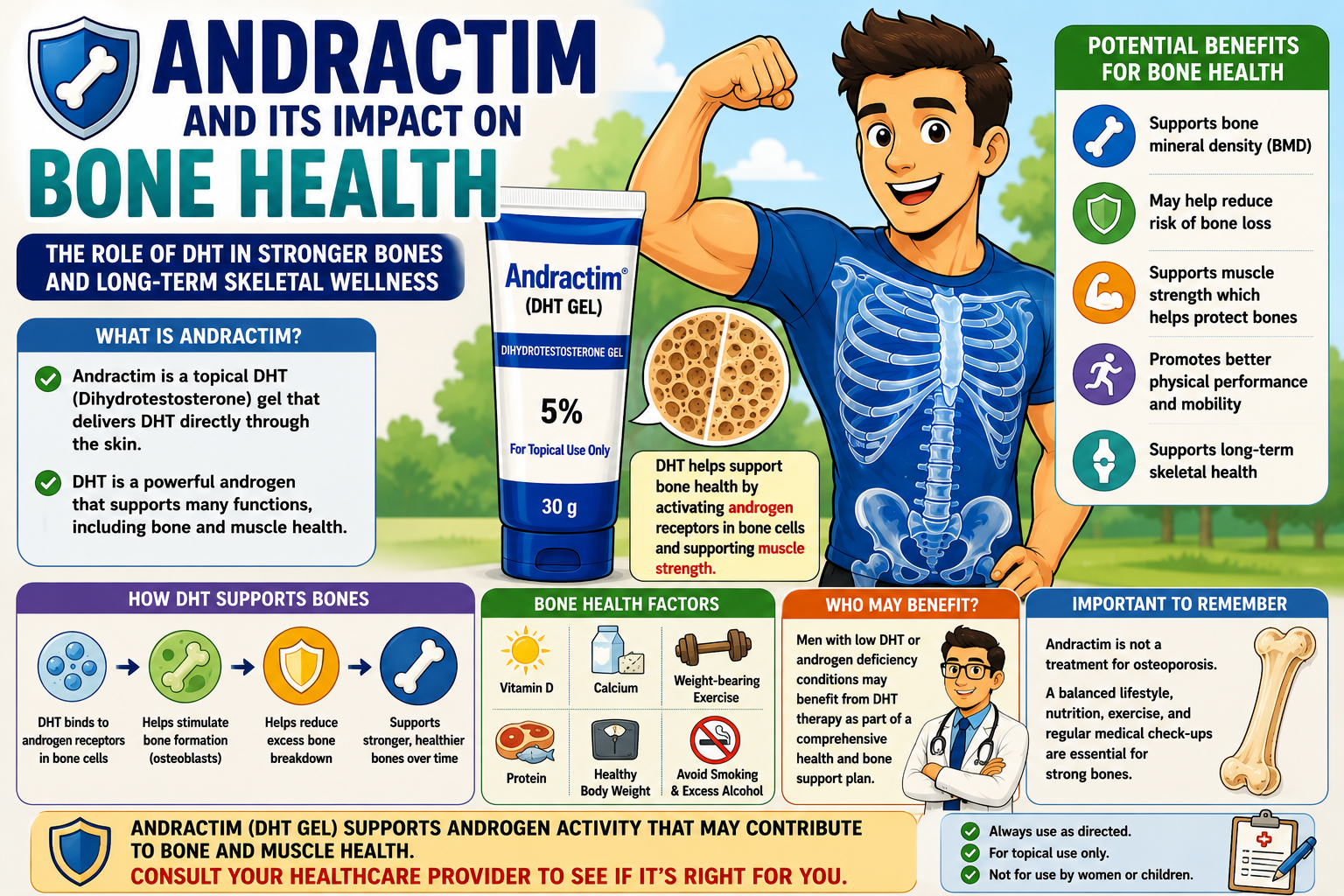
DHT, Bone Density, and Fracture Risk
One of the more interesting findings in recent research is that circulating DHT may be associated with fracture risk independent of bone density.
A large study of older men reported:
- Higher DHT levels were associated with a lower risk of hip fracture.
- Testosterone levels alone were not significantly associated with fracture risk after adjustment for other factors.
- DHT was not consistently associated with higher BMD, suggesting it may influence bone quality or muscle-related protection rather than bone density alone.
These findings highlight that bone strength depends on more than mineral density alone.
Bone Health Depends on More Than Hormones
Even with healthy androgen levels, maintaining strong bones requires multiple lifestyle factors.
Important contributors include:
- Adequate calcium intake
- Vitamin D
- Resistance training
- Weight-bearing exercise
- Sufficient protein intake
- Avoiding smoking
- Limiting excessive alcohol consumption
- Maintaining a healthy body weight
Hormone therapy should complement—not replace—these foundational measures.
Who May Benefit From Andractim?
Andractim has been investigated for selected androgen-related conditions under medical supervision.
Potential candidates may include individuals with:
- Certain androgen deficiency disorders
- Reduced DHT production
- Specific endocrine conditions
- Selected developmental disorders
The decision to use DHT therapy should always be individualized and based on clinical assessment.
Potential Benefits Beyond Bone Health
Research into DHT therapy has explored benefits related to:
- Libido
- Muscle maintenance
- Energy
- Sexual health
- Androgen receptor activation
- General well-being
These effects may indirectly support bone health by encouraging physical activity and preserving lean muscle mass.
Possible Side Effects
Like any androgen therapy, Andractim may produce side effects.
Potential effects include:
- Acne
- Oily skin
- Increased body hair growth
- Mood changes
- Local skin irritation
- Hair loss in genetically susceptible individuals
Patients should follow prescribed application instructions and discuss any concerns with their healthcare provider.
Frequently Asked Questions
Does Andractim strengthen bones?
Current evidence does not demonstrate that Andractim alone directly increases bone mineral density, although DHT may contribute to overall skeletal health through androgen receptor activity.
Is DHT important for bone health?
Yes. DHT participates in androgen signaling that supports musculoskeletal health, but healthy bones also depend on testosterone, estrogen, nutrition, exercise, and age-related factors.
Can low testosterone affect bone density?
Yes. Low testosterone has been associated with reduced bone mineral density in men, particularly those with hypogonadism.
Does Andractim prevent osteoporosis?
There is currently no evidence that Andractim should be used specifically to prevent osteoporosis. Bone health management should follow established medical guidelines, including adequate nutrition, exercise, and appropriate medical evaluation.
Conclusion
Andractim provides direct delivery of dihydrotestosterone (DHT), a potent androgen that plays an important role in male physiology. While DHT contributes to androgen receptor activity and may help support musculoskeletal function, current evidence does not demonstrate that Andractim alone significantly increases bone mineral density or should be considered a primary treatment for osteoporosis.
Instead, bone health should be viewed as the result of many interacting factors, including hormones, nutrition, resistance exercise, vitamin D status, calcium intake, genetics, and healthy lifestyle habits. For individuals with androgen deficiency, Andractim may form part of a broader hormone management strategy under appropriate medical supervision, while comprehensive bone health should continue to be supported through evidence-based preventive measures.
