- Your cart is empty
- Continue Shopping


Can 2-FDCK Help With Depression? Current Research, Potential Risks, and What We Know
- Guides
- Posted on
-
by admin
- 0 comments
Can 2-FDCK Help With Depression?
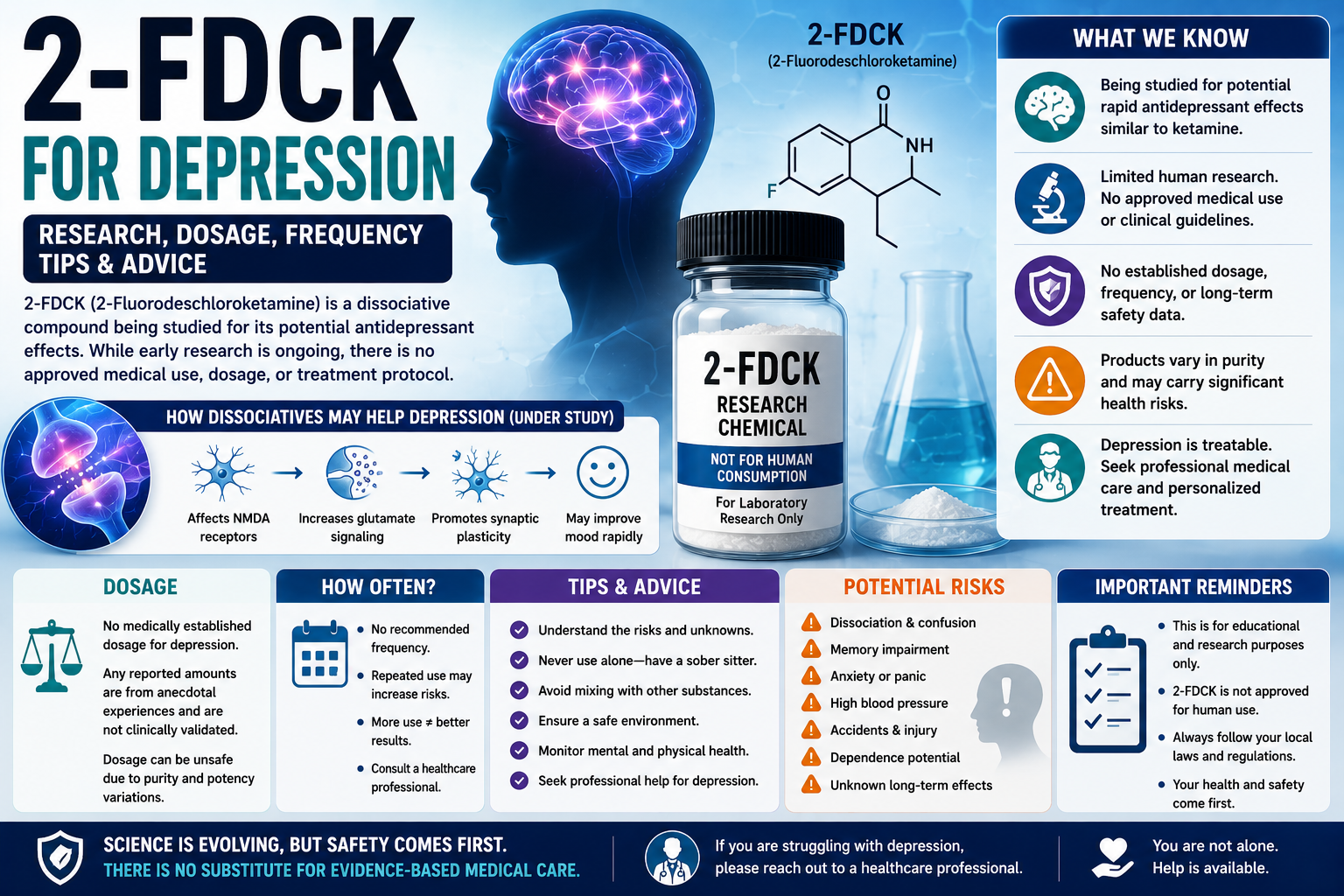
In recent years, researchers have become increasingly interested in dissociative compounds because of the rapid antidepressant effects observed with prescription ketamine and esketamine in carefully controlled clinical settings. Can 2-FDCK Help Depression? This growing interest has led to questions about structurally related compounds such as 2-Fluorodeschloroketamine (2-FDCK).
One of the most common questions is:
Can 2-FDCK be used to treat depression?
At present, the scientific answer is no established evidence supports 2-FDCK as a safe or approved treatment for depression. Although it shares structural similarities with ketamine, 2-FDCK has not undergone the extensive clinical trials required to demonstrate its safety, effectiveness, or appropriate therapeutic use in people with depression.
This article reviews the current scientific understanding, explains why comparisons with ketamine should be made cautiously, and summarizes the important research gaps that remain.
What Is 2-FDCK?
2-FDCK (2-Fluorodeschloroketamine) is a synthetic arylcyclohexylamine that belongs to the same broad chemical family as ketamine.
Researchers have primarily encountered it through:
- Analytical chemistry
- Forensic toxicology
- Novel psychoactive substance monitoring
- Laboratory pharmacology research
Unlike ketamine or esketamine, 2-FDCK is not an approved medicine for depression.
Why Are Researchers Interested in Dissociative Compounds?
The interest comes largely from research involving ketamine.
Clinical studies have shown that, under strict medical supervision, ketamine and the FDA-approved nasal spray esketamine can rapidly reduce depressive symptoms in some people with treatment-resistant depression.
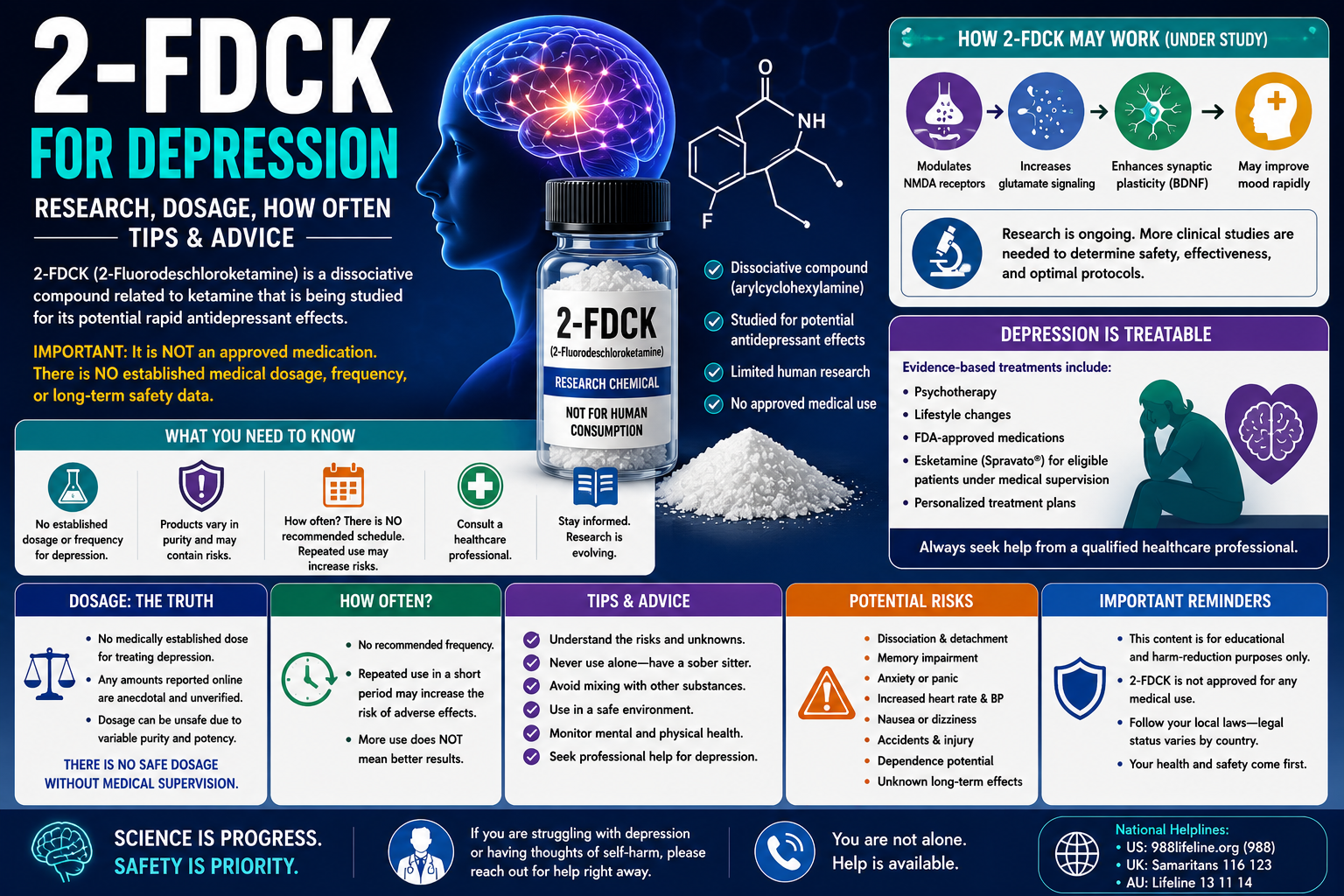
Scientists are studying how NMDA receptor modulation and downstream effects on glutamate signaling, synaptic plasticity, and brain-derived neurotrophic factor (BDNF) may contribute to these antidepressant effects.
This research has encouraged investigation into chemically related compounds, but similarity does not mean they have the same safety profile or clinical benefits.
Is 2-FDCK Approved for Depression?
No.
There is currently:
- No regulatory approval
- No established clinical guidelines
- No evidence-based therapeutic protocol
- No medically accepted treatment role
for 2-FDCK in depression.
Because controlled human studies are extremely limited, healthcare professionals cannot determine whether potential benefits outweigh potential risks.
Why There Is No Established Dosage or Treatment Schedule
Unlike approved medications, 2-FDCK has not completed the clinical development process needed to determine:
- Safe therapeutic dosing
- Treatment frequency
- Duration of therapy
- Drug interactions
- Long-term safety
- Monitoring requirements
For this reason, there is no medically established dosage or frequency recommendation for treating depression with 2-FDCK.
Potential Risks
Researchers continue to evaluate the health effects of 2-FDCK.
Potential concerns include:
- Impaired judgment
- Memory impairment
- Dissociation
- Anxiety or agitation
- Cardiovascular effects
- Accidental injury
- Dependence potential
- Unknown long-term neurological effects
Because products sold outside regulated pharmaceutical systems may vary in purity and composition, additional risks may exist.
How Depression Should Be Treated
Depression is a treatable medical condition, but treatment should be individualized and supervised by qualified healthcare professionals.
Evidence-based options may include:
- Psychotherapy
- Lifestyle interventions
- FDA-approved antidepressant medications
- Esketamine for eligible patients under certified medical programs
- Other specialist treatments depending on clinical circumstances
People experiencing persistent depression should seek evaluation from a licensed healthcare provider rather than relying on unapproved substances.
Frequently Asked Questions
Can 2-FDCK replace ketamine therapy?
No. There is no evidence demonstrating that 2-FDCK is an appropriate substitute for medically supervised ketamine or esketamine treatment.
Is there an approved dosage for depression?
No. There is no established therapeutic dosage because 2-FDCK has not been approved as a treatment for depression.
Why do researchers study compounds related to ketamine?
Researchers hope to better understand how NMDA receptor modulation influences mood disorders and whether future medicines can provide rapid antidepressant effects with improved safety profiles.
Is more research needed?
Yes. More laboratory, clinical, and long-term studies are needed before any conclusions can be drawn regarding safety or effectiveness.
Conclusion
Interest in 2-FDCK has grown because of advances in ketamine research, but the two substances should not be considered interchangeable. While ketamine and esketamine have been studied extensively in regulated medical settings, 2-FDCK has not demonstrated sufficient evidence to support its use as a treatment for depression.
Until robust clinical trials establish its safety and efficacy, there is no evidence-based therapeutic dosage or treatment schedule. Individuals seeking treatment for depression should consult qualified healthcare professionals and rely on therapies supported by high-quality clinical research.
