- Your cart is empty
- Continue Shopping


What Is 2-FDCK? Research, Pharmacology, Risks, and Safety Considerations
- Guides
- Posted on
-
by admin
- 0 comments
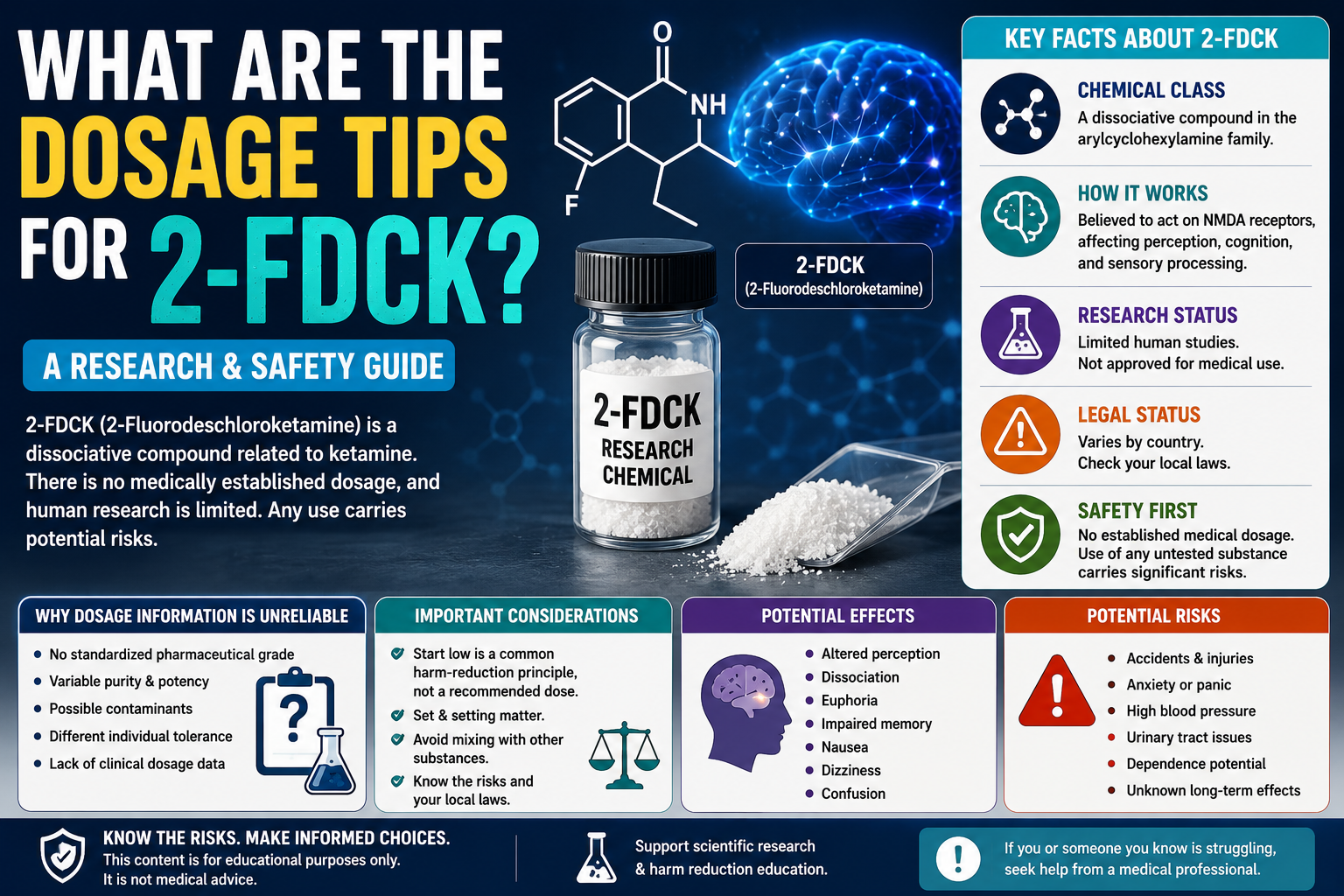
What Is 2-FDCK?
2-Fluorodeschloroketamine (2-FDCK) is a synthetic dissociative compound that belongs to the arylcyclohexylamine family, the same broad chemical class as ketamine and several other dissociative substances. It has appeared in the novel psychoactive substance (NPS) market and has attracted attention from researchers, forensic laboratories, toxicologists, and public health agencies.
Unlike approved medications, 2-FDCK has not undergone the extensive clinical testing required to establish its safety, effectiveness, dosing, or long-term health effects for medical use.
This article explains what researchers currently know about 2-FDCK, its pharmacology, potential risks, and why caution is warranted.
What Is 2-FDCK?
2-FDCK is a fluorinated analog of deschloroketamine and is chemically related to ketamine.
Researchers classify it as a dissociative anesthetic analog because laboratory studies suggest it primarily affects the N-methyl-D-aspartate (NMDA) receptor, a receptor involved in learning, memory, pain signaling, and perception.
Because human clinical research remains limited, much of the available information comes from analytical chemistry, toxicology, and forensic investigations.
How Does 2-FDCK Work?
Current evidence suggests that 2-FDCK acts mainly by reducing activity at NMDA receptors in the central nervous system.
Researchers are studying how this interaction may influence:
- Sensory perception
- Cognition
- Pain signaling
- Memory formation
- Conscious awareness
The complete pharmacological profile remains under investigation.
Is There an Established Medical Dosage?
No.
There is no medically established, evidence-based dosage for 2-FDCK because it is not an approved medicine and has not been evaluated through the large clinical trials required to determine safe therapeutic dosing.
The concentration and purity of products sold outside regulated pharmaceutical systems may also vary substantially, making any informal dosage information unreliable and potentially dangerous.
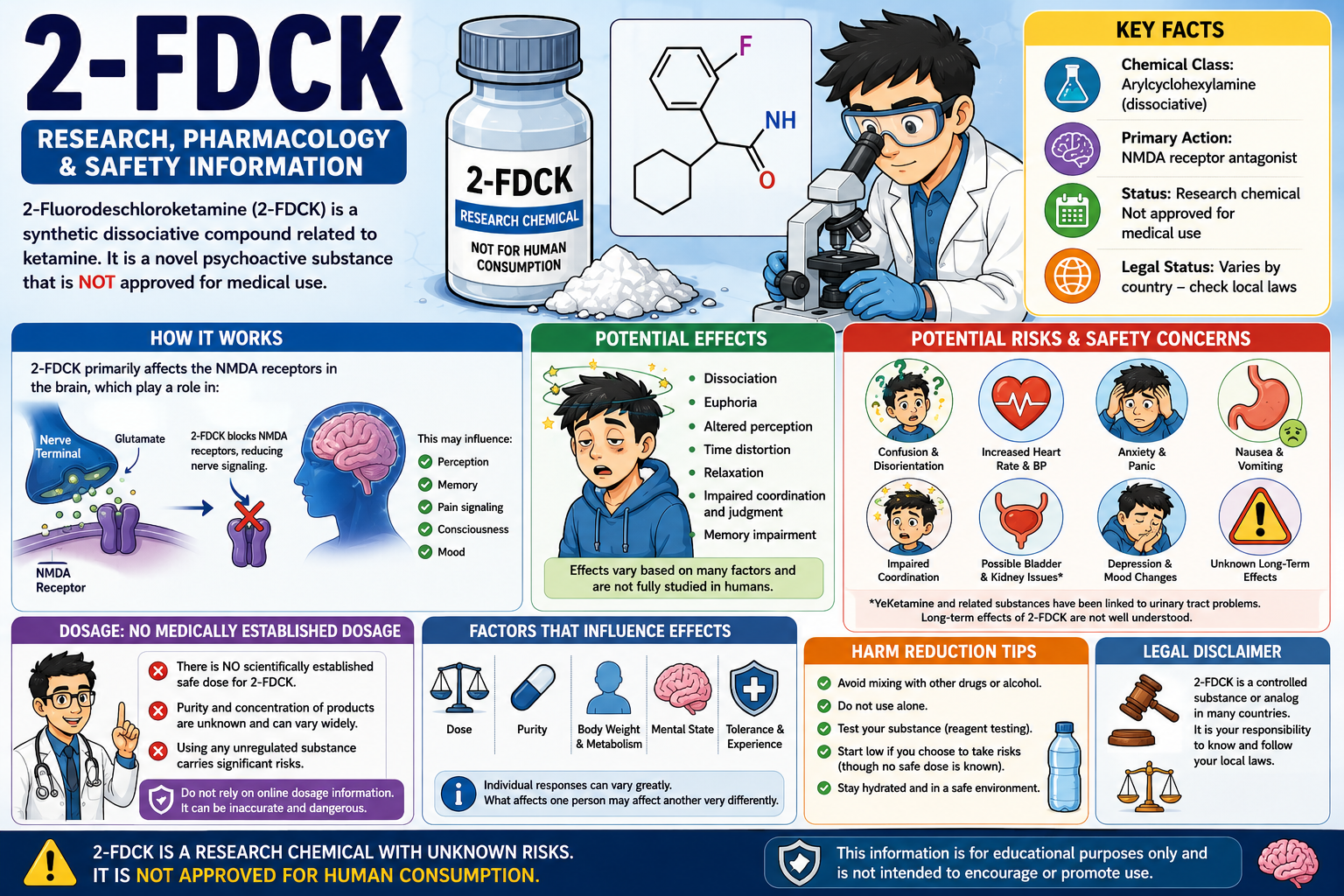
Why Dosage Information Is Unreliable
Several factors make dosage claims unreliable:
- No standardized pharmaceutical manufacturing
- Variable purity between products
- Unknown contaminants
- Limited human clinical research
- Differences in individual physiology
- Lack of regulatory oversight
For these reasons, information circulating online should not be considered medically validated.
Potential Risks
Researchers and public health agencies have identified several concerns associated with dissociative substances such as 2-FDCK.
Potential risks may include:
- Impaired coordination
- Confusion
- Memory impairment
- Altered judgment
- Elevated heart rate and blood pressure
- Nausea and vomiting
- Anxiety or agitation
- Accidental injury due to impaired awareness
The severity and duration of these effects can vary and are not fully characterized for 2-FDCK.
Unknown Long-Term Effects
One of the greatest concerns is the lack of long-term safety data.
Questions that remain under investigation include:
- Effects on memory
- Cognitive performance
- Urinary tract health
- Liver and kidney function
- Mental health outcomes
- Dependence potential
Because high-quality longitudinal studies are lacking, many long-term risks remain uncertain.
Drug Interactions
Combining dissociative substances with other central nervous system depressants—including alcohol, opioids, or benzodiazepines—may increase the risk of serious adverse effects such as excessive sedation and respiratory depression.
Individuals taking prescription medications should consult a qualified healthcare professional before using any unapproved psychoactive substance.
Legal Status
The legal status of 2-FDCK differs across countries and may change over time.
Some jurisdictions regulate it as a controlled substance, while others restrict it under broader laws governing novel psychoactive substances or analog compounds.
Anyone researching this compound should verify the laws that apply in their jurisdiction.
Frequently Asked Questions
Is 2-FDCK approved as a medicine?
No. It is not an approved medication in most countries and lacks established medical indications.
Is there a recommended dosage?
No. There is no evidence-based therapeutic dosage established through regulatory approval or large clinical studies.
Why are researchers interested in 2-FDCK?
Researchers study its chemistry, pharmacology, metabolism, analytical detection, and toxicology to better understand novel dissociative compounds and improve public health knowledge.
Is more research needed?
Yes. Additional laboratory, clinical, and epidemiological research is necessary to better understand its safety profile, pharmacology, and long-term effects.
Conclusion
2-FDCK is a synthetic dissociative compound that continues to be studied by researchers because of its relationship to ketamine and other arylcyclohexylamines. However, significant knowledge gaps remain regarding its safety, effectiveness, and long-term health effects.
Because there is no medically established dosage and products may vary in purity and composition, reliable dosing recommendations cannot be made. Future scientific research may improve understanding of this compound, but at present, its pharmacology and risk profile remain incompletely characterized.
