- Your cart is empty
- Continue Shopping


What Are Ecstasy Pills?
- Guides
- Posted on
-
by admin
- 0 comments
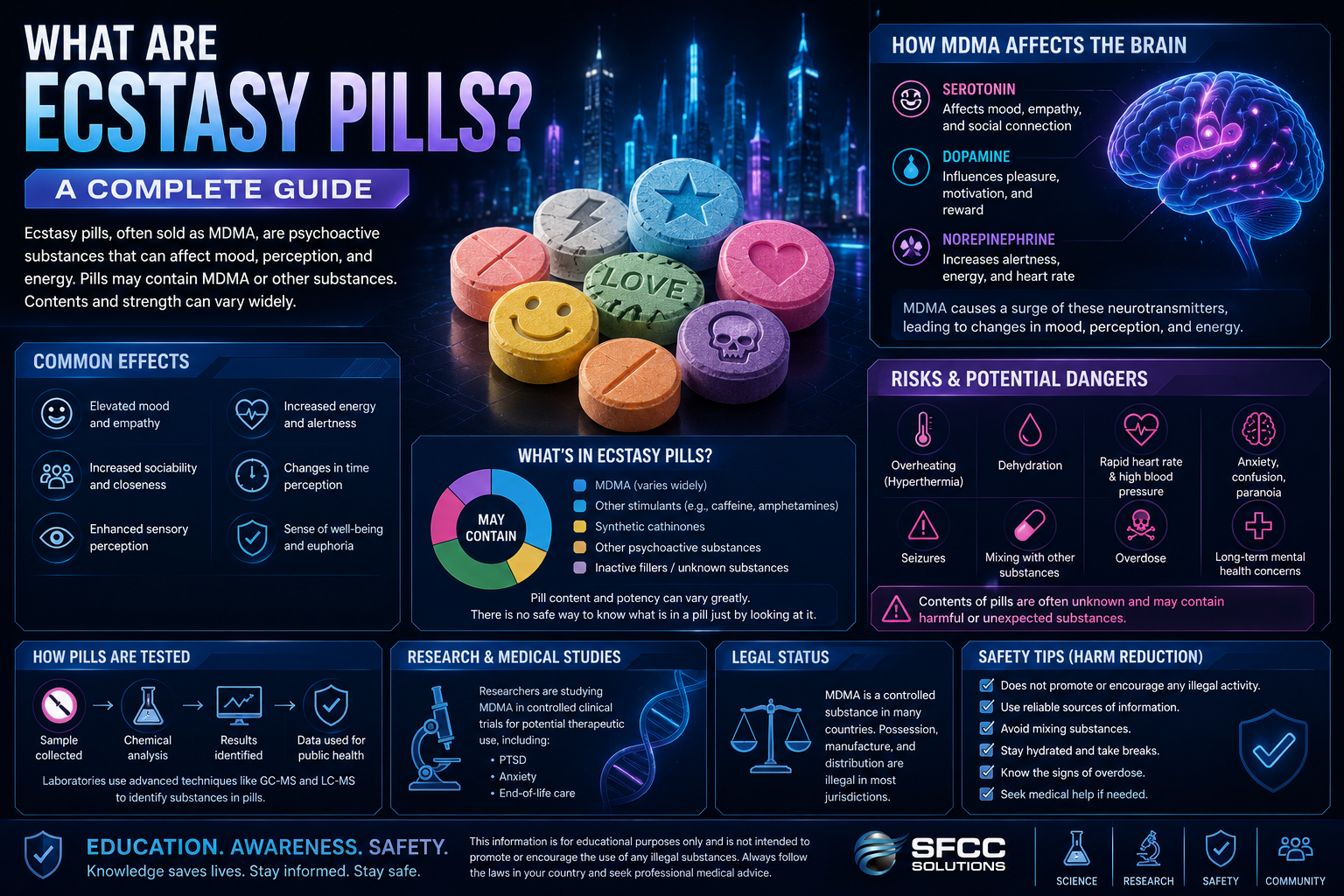
What Are Ecstasy Pills? A Complete Guide
Ecstasy pills are among the most widely recognized psychoactive substances discussed in public health, toxicology, and neuroscience. Often associated with nightlife culture and recreational settings, ecstasy has been the subject of scientific research for decades due to its unique effects on mood, perception, and brain chemistry.
Although many people use the terms “ecstasy” and “MDMA” interchangeably, there are important distinctions between them. Understanding what ecstasy pills are, how they affect the body, the risks associated with their use, and the current state of scientific research is essential for healthcare professionals, educators, researchers, and the general public.
This guide provides an evidence-based overview of ecstasy pills, including their history, composition, effects, health risks, toxicology, legal status, and ongoing research.
What Are Ecstasy Pills?
Ecstasy is a common street name for products that typically contain MDMA (3,4-methylenedioxymethamphetamine), a synthetic psychoactive substance that affects several neurotransmitter systems in the brain.
Ecstasy is most commonly encountered in tablet form, although the actual contents of pills sold as ecstasy can vary significantly.
One of the most important public health concerns surrounding ecstasy pills is that they may contain substances other than MDMA, including stimulants, synthetic cathinones, caffeine, or other psychoactive compounds.
As a result, the composition of ecstasy pills is often unpredictable.
MDMA vs Ecstasy: What’s the Difference?
Many people assume MDMA and ecstasy are identical, but there is an important distinction.
MDMA
MDMA refers specifically to the chemical compound 3,4-methylenedioxymethamphetamine.
Ecstasy
Ecstasy generally refers to tablets or capsules sold as containing MDMA but which may also contain other substances.
Because pill contents can vary, toxicologists and public health officials often emphasize the importance of distinguishing between pure MDMA and products marketed as ecstasy.
The History of MDMA and Ecstasy
MDMA was first synthesized in 1912 by chemists working for a German pharmaceutical company.
The compound remained largely unknown for many decades before attracting scientific interest in the 1970s and 1980s.
Researchers became interested in MDMA because of its unique psychological effects, which differed from traditional stimulants and hallucinogens.
During the late twentieth century, ecstasy emerged in nightlife and club settings in many parts of the world, leading to increased public awareness and regulatory attention.
How Does MDMA Affect the Brain?
MDMA influences several neurotransmitters involved in mood, emotion, and communication between nerve cells.
The primary neurotransmitters affected include:
- Serotonin
- Dopamine
- Norepinephrine
Serotonin
Serotonin plays a major role in:
- Mood regulation
- Emotional processing
- Sleep
- Appetite
- Social behavior
MDMA can cause a substantial release of serotonin, contributing to many of its psychological effects.
Dopamine
Dopamine is associated with:
- Motivation
- Reward processing
- Reinforcement learning
Norepinephrine
Norepinephrine helps regulate:
- Alertness
- Heart rate
- Blood pressure
- Stress responses
The combined effect on these neurotransmitter systems produces the characteristic profile associated with MDMA.
Common Effects Associated With MDMA
Researchers have documented a variety of effects associated with MDMA exposure.
Psychological Effects
Individuals may experience:
- Elevated mood
- Increased sociability
- Enhanced emotional openness
- Increased empathy
- Altered sensory perception
Physical Effects
Physical effects may include:
- Increased heart rate
- Elevated body temperature
- Increased blood pressure
- Jaw clenching
- Sweating
- Dilated pupils
Effects can vary depending on individual physiology, environmental conditions, dosage, and the composition of the substance consumed.
Why Are Ecstasy Pills a Public Health Concern?
Public health agencies continue to monitor ecstasy-related incidents for several reasons.
Unknown Composition
One of the biggest concerns is that ecstasy pills often contain substances other than MDMA.
Laboratory testing programs around the world have identified tablets containing:
- Synthetic stimulants
- Synthetic cathinones
- Other psychoactive compounds
- Pharmaceutical substances
- Various adulterants
This unpredictability increases health risks.
Variable Potency
Even when MDMA is present, potency can vary significantly between products.
This makes it difficult to predict physiological effects.
Environmental Risks
Certain environments may increase risks associated with MDMA use.
Examples include:
- Crowded venues
- High temperatures
- Prolonged physical activity
- Limited access to medical care
Understanding MDMA Toxicity
MDMA toxicity can occur when physiological responses overwhelm the body’s ability to maintain normal function.
Potential Warning Signs
Medical emergencies may involve:
- Severe overheating
- Confusion
- Agitation
- Rapid heart rate
- High blood pressure
- Seizures
- Loss of consciousness
Immediate medical evaluation is critical whenever serious symptoms occur.
Hyperthermia and Overheating
One of the most serious complications associated with MDMA-related emergencies is hyperthermia.
Hyperthermia occurs when body temperature rises to dangerous levels.
Potential consequences include:
- Organ damage
- Cardiovascular complications
- Neurological injury
- Medical emergencies requiring hospitalization
This is one reason healthcare professionals closely monitor body temperature during suspected MDMA toxicity cases.
Long-Term Health Considerations
Researchers continue studying the potential long-term effects associated with repeated MDMA exposure.
Areas of investigation include:
Cognitive Function
Scientists have examined potential effects on:
- Memory
- Learning
- Attention
- Information processing
Mental Health
Researchers have also investigated potential relationships between repeated exposure and:
- Anxiety
- Depression
- Mood regulation
- Emotional processing
Because individual outcomes vary substantially, additional research continues worldwide.
How Are Ecstasy Pills Tested?
Modern forensic and toxicology laboratories use advanced analytical technologies to identify compounds found in tablets.
Common methods include:
- Gas Chromatography-Mass Spectrometry (GC-MS)
- Liquid Chromatography-Mass Spectrometry (LC-MS)
- High-Resolution Mass Spectrometry (HRMS)
- Infrared Spectroscopy
These technologies help scientists identify known and emerging substances.
The Importance of Drug Monitoring Programs
Many countries maintain monitoring systems designed to identify new psychoactive substances and emerging drug trends.
These programs help:
- Detect dangerous adulterants
- Identify novel compounds
- Monitor public health risks
- Inform healthcare providers
- Support harm-reduction initiatives
Early warning systems play an important role in public health surveillance.
MDMA and Clinical Research
In recent years, scientific interest in MDMA has expanded beyond toxicology and public health.
Researchers have explored potential therapeutic applications under carefully controlled clinical conditions.
Areas of investigation have included:
- Post-traumatic stress disorder (PTSD)
- Anxiety-related conditions
- Trauma-focused therapies
These studies occur under strict ethical, regulatory, and medical oversight.
It is important to distinguish clinical research environments from non-medical use.
Legal Status of Ecstasy and MDMA
The legal status of MDMA varies internationally, but it is classified as a controlled substance in many jurisdictions.
Laws governing possession, distribution, manufacturing, and research differ between countries.
Researchers studying MDMA typically require special regulatory approval and oversight.
Key Facts About Ecstasy Pills
Important points to remember include:
- Ecstasy pills are commonly associated with MDMA.
- Pill contents may vary significantly.
- MDMA affects serotonin, dopamine, and norepinephrine systems.
- Health risks can increase when pill contents are unknown.
- Toxicology laboratories regularly identify unexpected compounds in tablets.
- Researchers continue studying MDMA in neuroscience and clinical settings.
- Public health agencies monitor emerging trends involving ecstasy and related substances.
Frequently Asked Questions
What are ecstasy pills?
Ecstasy pills are tablets commonly sold as containing MDMA, although their contents may vary and can include other substances.
Is ecstasy the same as MDMA?
Not always. MDMA refers to a specific chemical compound, while ecstasy often refers to tablets that may contain MDMA along with other ingredients.
How does MDMA affect the brain?
MDMA primarily affects serotonin, dopamine, and norepinephrine neurotransmitter systems.
Why are ecstasy pills considered risky?
One major concern is that the actual contents of ecstasy pills may be unknown, increasing the potential for adverse reactions and medical emergencies.
How do laboratories identify substances in ecstasy pills?
Scientists use techniques such as GC-MS, LC-MS, and other analytical methods to identify compounds.
Is MDMA being studied in medicine?
Researchers are investigating MDMA in controlled clinical studies for specific mental health conditions, subject to regulatory approval and medical supervision.
Conclusion
Ecstasy pills remain an important topic in neuroscience, toxicology, public health, and clinical research. Although commonly associated with MDMA, ecstasy tablets may contain a variety of substances, making their composition difficult to predict. Read more here.
Understanding the science behind MDMA, the risks associated with unknown pill contents, and the ongoing research into its effects helps promote informed discussion and evidence-based public health education. As scientific understanding continues to evolve, accurate information remains essential for healthcare professionals, researchers, policymakers, and the public. Click here for those seeking Ecstasy and researchers looking for Ecstasy pills.
