- Your cart is empty
- Continue Shopping


What Is PCP (Phencyclidine)?
- Guides
- Posted on
-
by admin
- 0 comments
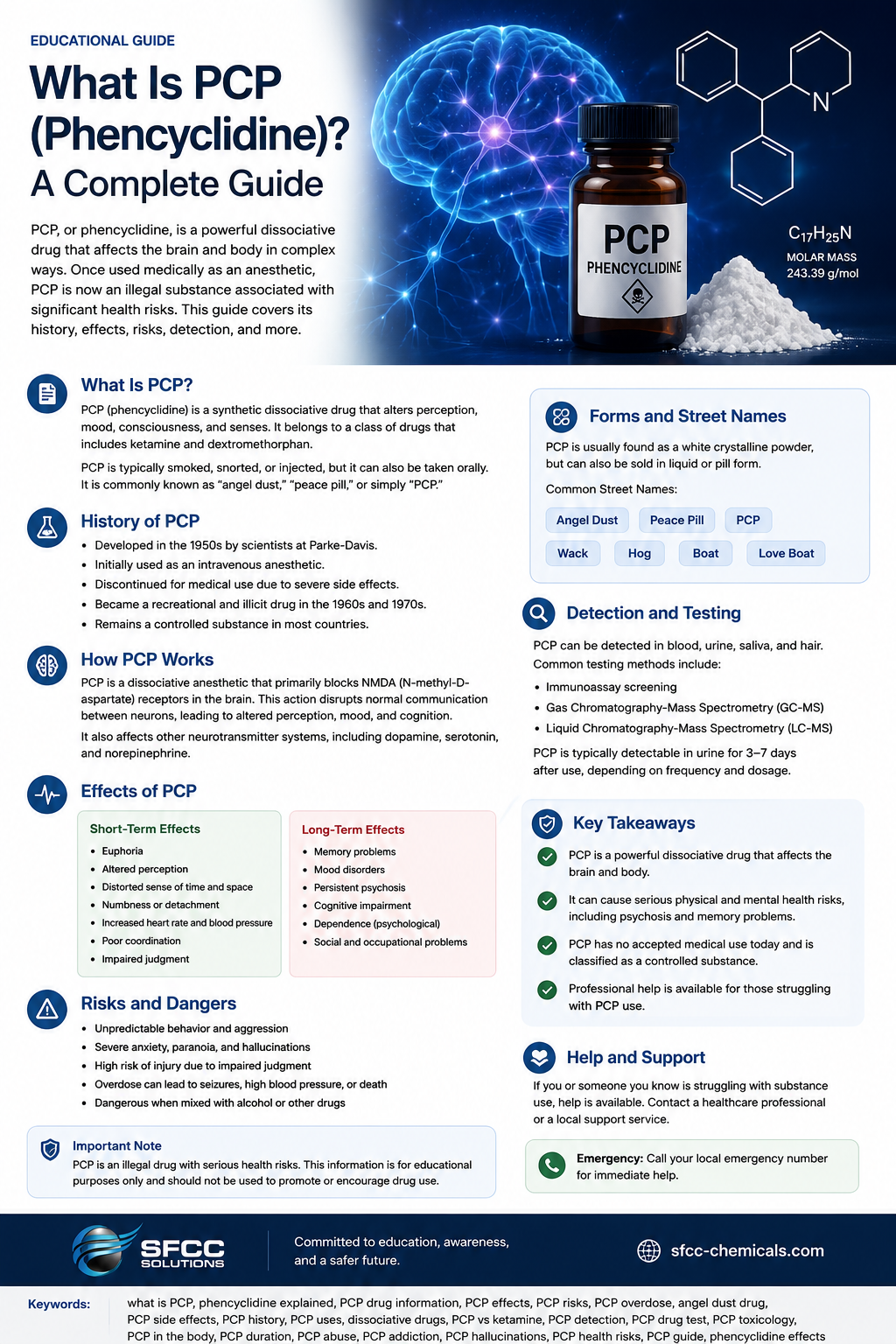
What Is PCP (Phencyclidine)? A Complete Guide
PCP, short for phencyclidine, is one of the most widely recognized dissociative substances in modern drug history. Originally developed as a medical anesthetic, PCP later became known for its powerful effects on perception, consciousness, and behavior. Today, it remains a topic of interest for healthcare professionals, toxicologists, researchers, and public health organizations due to its complex pharmacology and potential health risks.
This complete guide explores what PCP is, how it works, its history, effects, risks, legal status, and why it continues to be studied decades after its introduction.
What Is PCP (Phencyclidine)?
Phencyclidine, commonly known as PCP, is a synthetic dissociative drug that affects the brain and central nervous system. It was first developed in the 1950s as an intravenous anesthetic because of its ability to reduce pain and induce sedation.
However, medical use was eventually discontinued after patients experienced severe psychological side effects, including hallucinations, confusion, and agitation during recovery.
Today, PCP is classified as a controlled substance in many countries and is primarily encountered in forensic, toxicological, and public health settings.
Common Names for PCP
PCP is known by several street names, including:
- Angel Dust
- Peace Pill
- Rocket Fuel
- Hog
- Wack
- Embalming Fluid (although this term is often misused)
Understanding these terms can help healthcare providers, educators, and researchers identify discussions related to PCP exposure.
The History of PCP
The story of PCP began in 1956 when researchers sought a safer and more effective surgical anesthetic.
Initially, PCP showed promise because it provided:
- Powerful pain relief
- Sedation
- Amnesia during procedures
However, many patients experienced troubling psychological reactions after awakening from anesthesia.
These reactions included:
- Delusions
- Hallucinations
- Anxiety
- Disorientation
As a result, PCP was removed from routine medical use and eventually replaced by safer alternatives.
Despite this, the compound later emerged as a recreational drug and became a public health concern.
How Does PCP Work?
PCP primarily functions as an NMDA receptor antagonist.
This means it blocks specific receptors in the brain responsible for learning, memory, sensory perception, and communication between nerve cells.
When these receptors are blocked, individuals may experience altered perceptions of reality, changes in consciousness, and feelings of detachment from their surroundings.
Neurotransmitter Systems Affected by PCP
Research suggests PCP influences several neurotransmitter systems, including:
- Glutamate
- Dopamine
- Serotonin
- Norepinephrine
This broad neurological activity helps explain the complex and unpredictable effects associated with PCP exposure.
What Are the Effects of PCP?
The effects of PCP vary depending on dose, route of administration, individual physiology, and environmental factors.
Short-Term Effects
Common short-term effects may include:
- Altered perception
- Dissociation
- Euphoria
- Numbness
- Distorted sense of time
- Impaired coordination
- Confusion
- Increased blood pressure
- Rapid eye movements
Psychological Effects
Some individuals may experience:
- Hallucinations
- Anxiety
- Panic
- Delusions
- Paranoia
- Mood changes
The intensity of these effects can vary significantly from person to person.
Why Is PCP Considered Dangerous?
One reason PCP remains a public health concern is its unpredictable nature.
Unlike some substances that produce relatively consistent effects, PCP can affect individuals differently depending on dosage and circumstances.
Potential risks include:
- Impaired judgment
- Increased accident risk
- Aggressive behavior
- Severe confusion
- Psychotic episodes
- Dangerous decision-making
These effects can create safety concerns for both affected individuals and those around them.
Long-Term Effects of PCP
Researchers continue to study the long-term impact of PCP exposure.
Potential long-term effects may include:
- Memory difficulties
- Problems with concentration
- Mood disturbances
- Persistent psychological symptoms
- Social and occupational impairment
The severity and duration of these effects vary considerably among individuals.
PCP Overdose and Toxicity
High levels of PCP exposure can result in serious medical complications.
Possible Signs of PCP Toxicity
Symptoms may include:
- Severe agitation
- Extreme confusion
- Hallucinations
- Elevated body temperature
- High blood pressure
- Seizures
- Loss of consciousness
Medical emergencies involving PCP require immediate professional evaluation and treatment.
How Is PCP Detected?
Healthcare providers and forensic laboratories use several testing methods to detect PCP.
Common Detection Methods
- Urine testing
- Blood testing
- Saliva testing
- Hair analysis
Advanced laboratory techniques may include:
- Gas Chromatography-Mass Spectrometry (GC-MS)
- Liquid Chromatography-Mass Spectrometry (LC-MS)
These methods help confirm exposure and support clinical or forensic investigations.
Legal Status of PCP
PCP is classified as a controlled substance in many jurisdictions due to its potential for misuse and health risks.
Regulations vary by country, but unauthorized possession, manufacture, or distribution is generally prohibited under national drug-control laws.
Researchers and institutions studying PCP must comply with relevant regulatory requirements.
PCP vs Ketamine: What’s the Difference?
PCP and ketamine belong to the dissociative drug category and share some pharmacological similarities.
However, important differences exist.
PCP
- Longer duration of action
- Greater potential for severe psychological effects
- Higher likelihood of prolonged behavioral disturbances
Ketamine
- Approved medical uses
- Shorter duration
- Commonly used in anesthesia and certain mental health treatments
Understanding these distinctions helps clarify why the two substances are treated differently in medical practice.
Public Health Importance of PCP Research
Although PCP was developed decades ago, it remains relevant to modern healthcare and public health discussions.
Researchers continue studying PCP to better understand:
- Dissociative disorders
- Brain function
- NMDA receptor activity
- Substance-related psychiatric symptoms
- Emergency medicine responses
Insights gained from PCP research have contributed to broader understanding of neuroscience and pharmacology.
Practical Takeaways
If you are researching PCP for educational or professional purposes, remember these key points:
- PCP stands for phencyclidine.
- It was originally developed as an anesthetic.
- Medical use was discontinued because of severe psychological side effects.
- PCP acts primarily as an NMDA receptor antagonist.
- It can significantly alter perception, mood, and cognition.
- High-dose exposure can lead to serious medical emergencies.
- PCP remains an important subject in toxicology, neuroscience, and public health research.
Internal Linking Opportunities
To strengthen topical authority, link this article to related content such as:
- Understanding Dissociative Drugs
- PCP vs Ketamine: Key Differences
- How Drug Testing Detects PCP
- The Science of NMDA Receptors
- Hallucinogens and Dissociative Substances Explained
- Advances in Forensic Toxicology
- Public Health Challenges Associated With Psychoactive Drugs
Frequently Asked Questions
What is PCP?
PCP, or phencyclidine, is a synthetic dissociative drug originally developed as an anesthetic but later discontinued due to severe psychological side effects.
Why is PCP called Angel Dust?
Angel Dust is one of several street names historically associated with PCP.
How does PCP affect the brain?
PCP primarily blocks NMDA receptors, disrupting communication between nerve cells and altering perception, awareness, and cognition.
Is PCP still used medically?
No. PCP is no longer used in human medicine because of significant adverse psychological reactions.
How long can PCP be detected?
Detection windows vary based on testing method, dosage, and individual factors. Urine, blood, saliva, and hair testing may all be used.
Why is PCP important in toxicology?
PCP remains an important compound for toxicologists because of its complex effects, detection challenges, and role in emergency medicine and forensic investigations.
Conclusion
Understanding what PCP (phencyclidine) is requires examining its history, pharmacology, effects, and public health impact. Although originally developed as a promising anesthetic, PCP’s powerful effects on the brain ultimately limited its medical use and contributed to its classification as a controlled substance.
Today, PCP continues to be studied by neuroscientists, toxicologists, healthcare professionals, and public health experts seeking to better understand dissociative drugs and their effects on human behavior. Accurate education and scientific awareness remain essential for understanding the risks and significance of PCP in modern society. Read more here and click here for researchers or PCP seekers
