- Your cart is empty
- Continue Shopping


What Is DHT Powder?
- Guides
- Posted on
-
by admin
- 0 comments
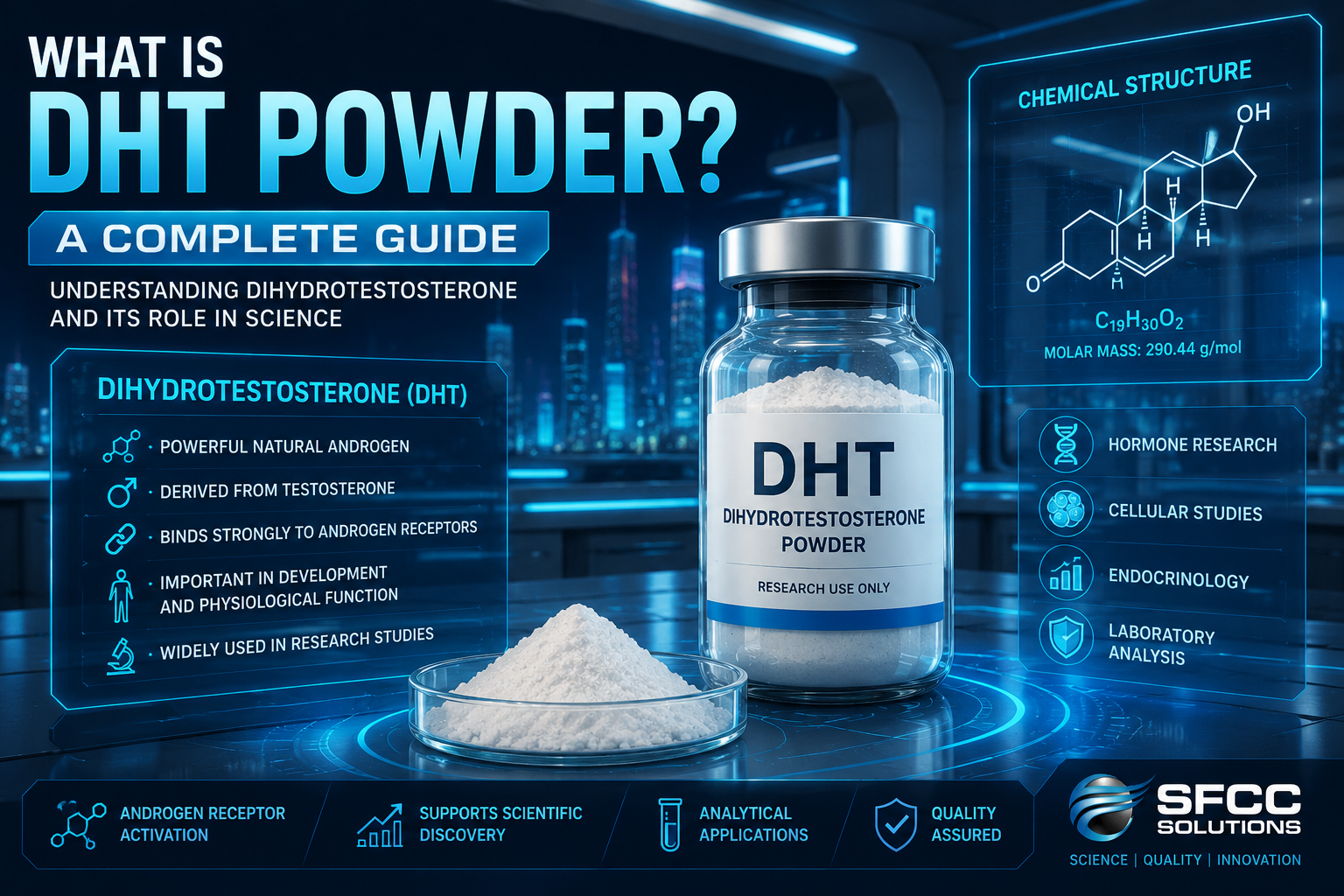
What Is DHT Powder? A Complete Guide
Dihydrotestosterone, commonly known as DHT, is one of the most important androgen hormones in the human body. Derived from testosterone through a natural enzymatic process, DHT plays a crucial role in male development, reproductive health, and various biological functions throughout life.
As scientific interest in hormone research continues to grow, many researchers, students, and healthcare professionals are seeking reliable information about DHT and its properties. This guide explores what DHT powder is, how it works, its biological significance, chemical characteristics, research applications, and why it remains a subject of ongoing scientific study.
What Is DHT Powder?
DHT powder refers to the powdered form of dihydrotestosterone, a naturally occurring androgen hormone that is synthesized in the body from testosterone through the action of the enzyme 5-alpha reductase.
DHT is considered one of the most potent naturally occurring androgens because it binds strongly to androgen receptors and exerts significant biological effects.
In research settings, DHT powder may be used for analytical, biochemical, and endocrinological studies involving androgen receptor activity and hormone signaling pathways.
Understanding Dihydrotestosterone (DHT)
Dihydrotestosterone is a steroid hormone belonging to the androgen family.
It is produced primarily in:
- Skin tissue
- Prostate tissue
- Hair follicles
- Liver
- Reproductive organs
Once formed, DHT interacts with androgen receptors throughout the body, influencing numerous physiological processes.
Chemical Profile of DHT
Key characteristics include:
- Chemical Name: Dihydrotestosterone
- Hormone Class: Androgen
- Molecular Formula: C19H30O2
- Derived From: Testosterone
- Enzyme Involved: 5-Alpha Reductase
DHT differs from testosterone by possessing a stronger binding affinity for androgen receptors, making it a particularly powerful androgenic hormone.
How Is DHT Produced?
DHT is produced through a natural biological conversion process.
The enzyme 5-alpha reductase converts testosterone into dihydrotestosterone in various tissues throughout the body.
Simplified Hormone Pathway
Testosterone → 5-Alpha Reductase → DHT
This conversion plays an important role in androgen-mediated physiological functions.
Why Is DHT Important?
DHT contributes to several biological processes throughout human development.
Functions During Development
DHT plays a key role in:
- Male fetal development
- Formation of external reproductive structures
- Sexual maturation
- Development of androgen-sensitive tissues
Functions in Adulthood
In adults, DHT influences:
- Hair follicle activity
- Skin physiology
- Prostate function
- Androgen receptor signaling
- Hormonal regulation
Researchers continue studying DHT to better understand its role in endocrine health and androgen biology.
DHT vs Testosterone: What’s the Difference?
Although DHT and testosterone are closely related, they are not identical.
Testosterone
- Primary male sex hormone
- Produced mainly in the testes
- Supports muscle development
- Contributes to bone health
- Precursor to DHT
DHT
- Derived from testosterone
- Stronger androgen receptor binding
- More potent androgenic activity
- Influences androgen-sensitive tissues
Because of these differences, DHT and testosterone often produce distinct physiological effects.
How Does DHT Work?
DHT exerts its effects by binding to androgen receptors located in various tissues.
When activated, these receptors influence gene expression and cellular activity.
Key Biological Actions
DHT contributes to:
- Cellular signaling
- Hormonal communication
- Tissue development
- Androgen-responsive biological processes
Its strong receptor affinity makes DHT one of the most biologically active androgens in the body.
DHT and Hair Follicles
One of the most widely discussed aspects of DHT research involves its interaction with hair follicles.
Researchers have observed that DHT influences hair growth patterns differently depending on the location of the follicle.
For example:
- Facial hair follicles may respond positively to DHT stimulation.
- Scalp hair follicles in genetically susceptible individuals may respond differently.
This area remains a significant focus of endocrinology and dermatology research.
DHT and Prostate Research
DHT also plays an important role in prostate physiology.
Because androgen receptors are abundant within prostate tissue, DHT has become a major area of study in:
- Endocrinology
- Urology
- Hormone research
- Aging-related studies
Researchers continue investigating how DHT influences normal prostate function throughout life.
Scientific Research Applications of DHT Powder
DHT powder is commonly referenced in scientific literature involving:
Endocrinology Research
Researchers use DHT to study:
- Hormonal regulation
- Androgen receptor activity
- Hormone signaling pathways
Cellular Research
DHT may be examined in studies involving:
- Cell culture models
- Receptor activation
- Gene expression analysis
Biochemical Research
Scientists may investigate:
- Steroid hormone metabolism
- Hormone interactions
- Molecular signaling mechanisms
These applications help expand our understanding of androgen biology.
Laboratory Analysis of DHT
Modern laboratories use advanced analytical techniques to identify and quantify DHT.
Common methods include:
- Liquid Chromatography-Mass Spectrometry (LC-MS)
- Gas Chromatography-Mass Spectrometry (GC-MS)
- High Performance Liquid Chromatography (HPLC)
- Immunoassay Testing
These technologies support accurate hormone measurement and research investigations.
DHT Storage and Stability Considerations
In laboratory environments, researchers follow strict protocols for handling hormone reference materials.
Common considerations include:
- Proper temperature control
- Protection from moisture
- Protection from light exposure
- Secure storage conditions
- Quality control procedures
Maintaining stability is important for ensuring analytical accuracy.
Why Researchers Study DHT
DHT remains one of the most important hormones in androgen research.
Scientists study DHT to better understand:
- Male reproductive biology
- Hormonal signaling
- Endocrine function
- Androgen receptor activation
- Hair follicle biology
- Hormone metabolism
Continued research helps improve scientific knowledge of hormone-related physiological processes.
Practical Takeaways
If you’re researching DHT powder, remember these key points:
- DHT stands for dihydrotestosterone.
- It is a naturally occurring androgen hormone.
- DHT is produced from testosterone through 5-alpha reductase activity.
- It binds strongly to androgen receptors.
- DHT plays important roles in development and adult physiology.
- Researchers frequently study DHT in endocrinology and hormone science.
- Advanced laboratory methods are used to analyze DHT.
Internal Linking Opportunities
To strengthen topical authority, consider linking this article to:
- What Is Testosterone? A Complete Guide
- DHT vs Testosterone: Understanding the Differences
- The Role of Androgens in Human Physiology
- Understanding Hormone Receptors
- How 5-Alpha Reductase Works
- Hair Follicle Biology Explained
- Advances in Endocrinology Research
- Hormone Testing and Laboratory Analysis
Frequently Asked Questions
What is DHT powder?
DHT powder refers to the powdered form of dihydrotestosterone, a naturally occurring androgen hormone derived from testosterone.
What does DHT stand for?
DHT stands for dihydrotestosterone, one of the most potent naturally occurring androgens in the human body.
How is DHT produced?
DHT is produced when the enzyme 5-alpha reductase converts testosterone into dihydrotestosterone.
Why is DHT important?
DHT plays essential roles in development, androgen receptor activation, reproductive physiology, and various endocrine functions.
Is DHT stronger than testosterone?
DHT binds more strongly to androgen receptors than testosterone, making it a highly potent androgen.
Why do scientists study DHT?
Researchers study DHT to better understand hormone biology, androgen signaling, endocrinology, and physiological development.
Conclusion
Understanding what DHT powder is begins with understanding the vital role of dihydrotestosterone in human biology. As one of the body’s most powerful androgens, DHT contributes to developmental processes, androgen receptor activity, and numerous physiological functions throughout life.
From endocrinology and hormone signaling to hair follicle biology and receptor research, DHT remains an important subject of scientific investigation. As research advances, our understanding of this influential hormone continues to expand, helping researchers and healthcare professionals better understand the complexities of androgen function and human physiology. Click here if you are a researcher or seeker.
