- Your cart is empty
- Continue Shopping


Andractim and Skin Irritation: Causes, Prevention, Symptoms, and Treatment
- Guides
- Posted on
-
by admin
- 0 comments
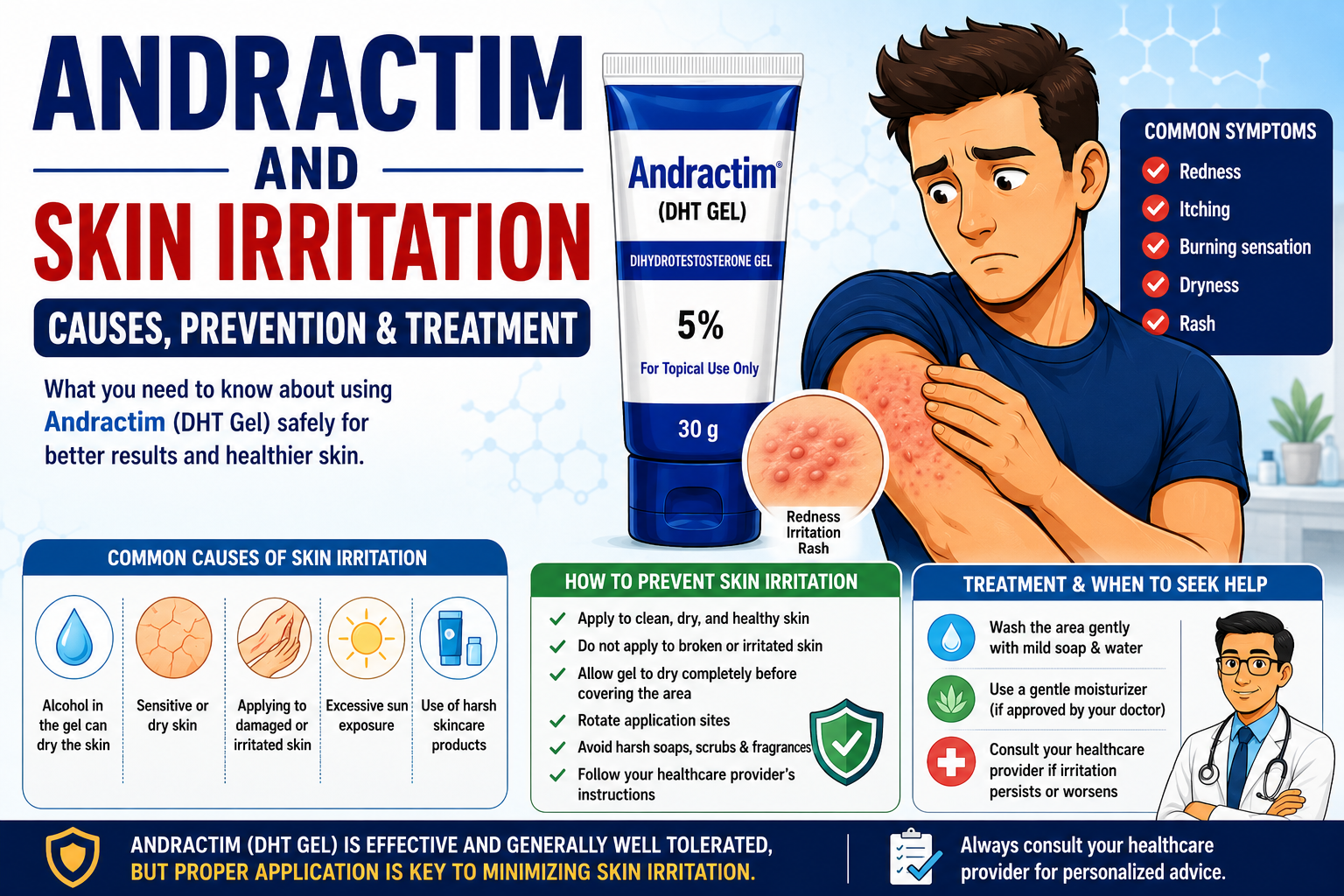
Andractim and Skin Irritation:
Andractim® (Dihydrotestosterone Gel) is a topical androgen therapy designed to deliver dihydrotestosterone (DHT) directly through the skin. While many users tolerate Andractim well, skin irritation remains one of the most frequently discussed concerns associated with topical hormone therapies.
Because Andractim is applied directly to the skin, localized reactions can sometimes occur at the application site. Understanding why irritation develops, how to minimize the risk, and what symptoms to watch for can help users achieve better treatment outcomes while maintaining healthy skin.
This guide explores the relationship between Andractim and skin irritation, common causes, prevention strategies, and the science behind topical DHT therapy.
What Is Andractim?
Andractim is a transdermal gel containing dihydrotestosterone (DHT), a potent androgen derived naturally from testosterone. DHT plays a significant role in male sexual development, androgen receptor activation, libido, and certain aspects of male physiology.
The gel formulation allows DHT to be absorbed through the skin and enter circulation without requiring injection or oral administration. Andractim is intended for external use only and should not be applied to broken or damaged skin.
Can Andractim Cause Skin Irritation?
Yes.
Like many topical medications and hormone gels, Andractim may cause localized skin reactions in some individuals.
Potential symptoms include:
- Redness
- Mild burning sensation
- Itching
- Dryness
- Skin sensitivity
- Rash-like irritation
- Mild inflammation
The severity varies between individuals depending on skin type, application technique, and sensitivity to ingredients within the formulation.
While some studies reported no objective skin irritation among participants using DHT gel under controlled conditions, individual responses can differ in real-world use.
Why Does Skin Irritation Occur?
Several factors may contribute to irritation.
1. Alcohol-Based Gel Components
Many transdermal gels contain alcohols or penetration enhancers that improve hormone absorption.
These ingredients may:
- Dry the skin
- Disrupt the skin barrier
- Increase sensitivity
- Cause temporary burning sensations
2. Sensitive Skin
Individuals with naturally sensitive skin may be more likely to develop irritation after repeated topical application.
3. Frequent Application
Repeated use on the same skin area can occasionally lead to cumulative irritation.
4. Existing Skin Conditions
People with:
- Eczema
- Dermatitis
- Psoriasis
- Allergic skin conditions
may be more susceptible to local reactions.
5. Application to Damaged Skin
Andractim should never be applied to:
- Cuts
- Abrasions
- Open wounds
- Inflamed skin
Applying DHT gel to damaged skin can increase irritation and alter absorption.
Common Symptoms of Andractim Skin Irritation
Symptoms may vary from mild to moderate.
Mild Symptoms
- Temporary redness
- Slight itching
- Mild dryness
- Warm sensation after application
Moderate Symptoms
- Persistent irritation
- Noticeable rash
- Increased sensitivity
- Skin peeling
Severe Symptoms
Although uncommon, users should seek medical advice if they experience:
- Significant swelling
- Severe burning
- Blistering
- Allergic reactions
- Persistent worsening symptoms
Risk Factors for Skin Reactions
Several factors may increase the likelihood of irritation.
Dry Skin
Dry skin often has a weaker protective barrier.
Excessive Sun Exposure
Sun-damaged skin may react more strongly to topical products.
Fragrances and Other Products
Applying Andractim alongside harsh skincare products may increase irritation.
Overapplication
Using more gel than prescribed can increase local skin exposure and may contribute to irritation.
How to Reduce the Risk of Skin Irritation
Proper application technique is one of the best ways to minimize side effects.
Apply to Clean Skin
Always wash and dry the application area before use.
Rotate Application Sites
Rotating approved application areas may help reduce repeated stress on the same section of skin.
Avoid Broken Skin
Do not apply the gel to irritated, damaged, or inflamed areas.
Allow the Gel to Dry
The gel should be allowed to dry fully before clothing comes into contact with the treated area.
Use Moisturizer if Approved
Some users may benefit from using a gentle moisturizer at a separate time of day, depending on healthcare provider recommendations.

Does Skin Irritation Affect DHT Absorption?
In some cases, severe skin reactions may affect how consistently the medication is absorbed.
Healthy skin generally provides the most predictable transdermal absorption.
When inflammation occurs:
- Absorption patterns may change
- User comfort decreases
- Treatment adherence may suffer
This is why addressing irritation early is important.
Other Possible Side Effects of Andractim
Although skin irritation is among the most common topical concerns, other androgen-related side effects have been reported.
Potential effects may include:
- Acne
- Increased oil production
- Seborrhea
- Increased body hair growth
- Hair loss in genetically susceptible individuals
- Mood changes
- Weight changes in some users
These effects are generally related to androgen activity rather than direct skin irritation.
What Research Says About DHT Gel Safety
Several studies examining transdermal DHT therapy have reported favorable tolerability profiles.
Research involving DHT gel administration found no objective evidence of skin irritation in study participants, suggesting that many users tolerate the formulation well when used appropriately.
Other clinical investigations have described topical DHT treatment as generally safe and well tolerated, although ongoing monitoring remains important during therapy.
When Should You Contact a Healthcare Professional?
Seek professional medical advice if:
- Skin irritation persists
- Symptoms worsen over time
- Blisters develop
- Significant swelling occurs
- Signs of allergic reaction appear
- You are uncertain whether symptoms are treatment-related
Early evaluation can help prevent complications and improve treatment outcomes.
Frequently Asked Questions
Is mild redness normal after applying Andractim?
Some individuals may experience temporary redness or mild irritation, particularly when beginning treatment.
Can I apply Andractim to sensitive skin?
Individuals with sensitive skin should discuss treatment plans with their healthcare provider before starting therapy.
Should I stop using Andractim if irritation occurs?
Persistent or severe irritation should be evaluated by a healthcare professional before continuing treatment.
Can Andractim cause allergic reactions?
Although uncommon, allergic reactions are possible with virtually any topical medication.
Does everyone experience skin irritation?
No. Many users tolerate topical DHT gel without significant skin-related side effects.
Conclusion
Andractim remains an important topical DHT therapy used in androgen-related treatment settings. While skin irritation is one of the most commonly discussed side effects of topical hormone gels, most reactions are mild and manageable with proper application techniques and appropriate skin care.
Understanding risk factors, recognizing early symptoms, and following recommended application guidelines can help minimize discomfort while supporting effective DHT delivery. As with any hormone therapy, consultation with a qualified healthcare professional remains essential to ensure safe and effective treatment.
