- Your cart is empty
- Continue Shopping


What Is Amphetamine Powder?
- Guides
- Posted on
-
by admin
- 0 comments
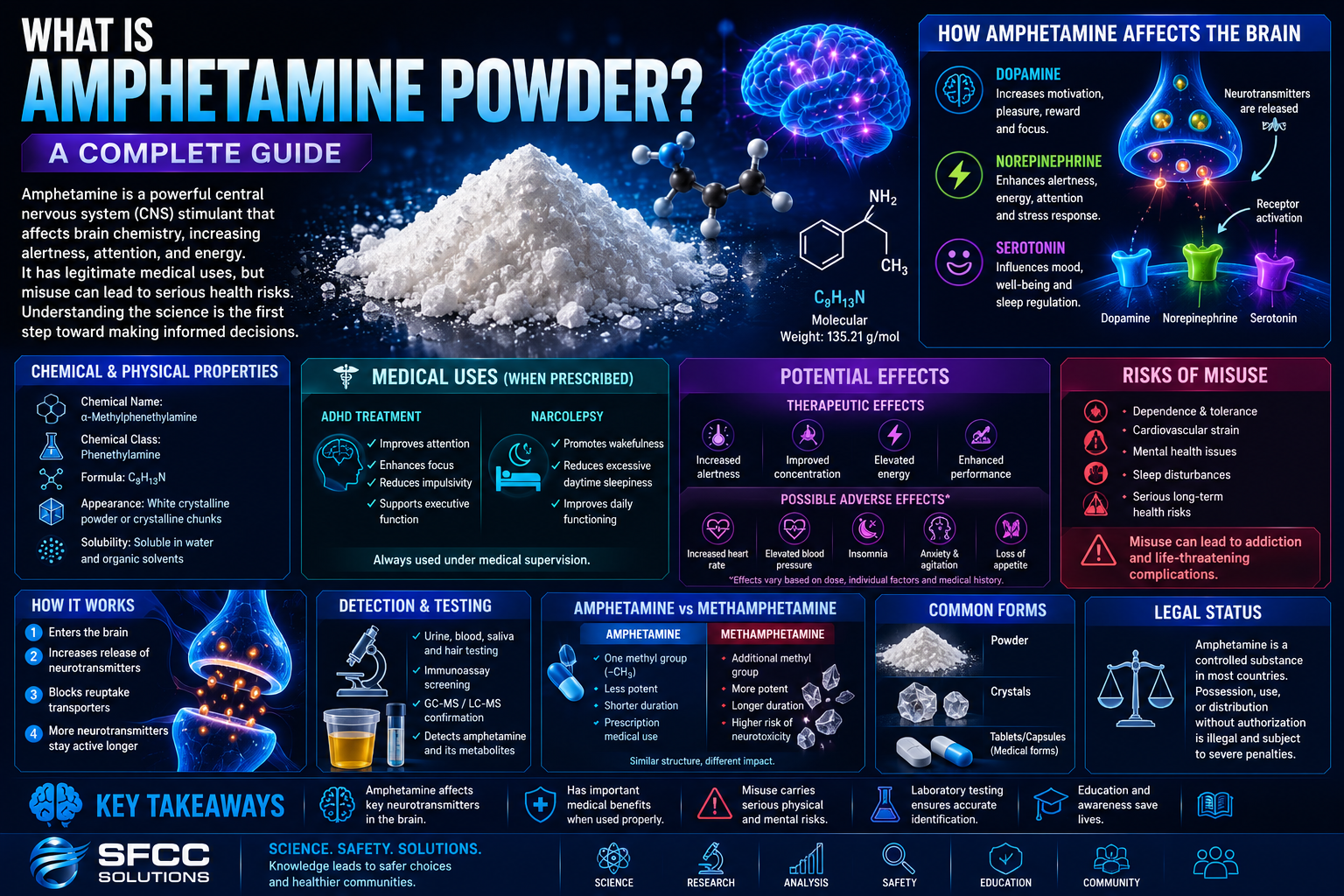
What Is Amphetamine Powder? A Complete Guide
Amphetamine is one of the most studied stimulant compounds in modern medicine, neuroscience, pharmacology, and public health. For more than a century, researchers have investigated its effects on the brain, nervous system, and human behavior. Today, amphetamine-based medications continue to play important roles in healthcare, while amphetamine-related substances remain a significant focus of toxicology, forensic science, and public health monitoring.
Understanding amphetamine powder requires examining its chemical properties, history, medical uses, pharmacology, effects on neurotransmitters, safety considerations, and ongoing scientific research.
This comprehensive guide explores what amphetamine powder is, how it works, its history, therapeutic applications, toxicology, detection methods, and why it remains one of the most important stimulant compounds studied worldwide.
What Is Amphetamine Powder?
Amphetamine is a synthetic central nervous system (CNS) stimulant that belongs to a class of compounds known as phenethylamines.
The term “amphetamine powder” generally refers to amphetamine in powdered form, which may be encountered in pharmaceutical, analytical, forensic, or research contexts.
Amphetamine affects several neurotransmitter systems within the brain, particularly those involving dopamine and norepinephrine.
Because of its stimulant properties, amphetamine has been extensively studied in medicine, neuroscience, psychiatry, toxicology, and pharmacology.
What Is Amphetamine Powder? A Complete Guide
The history of amphetamine spans more than a century and reflects significant developments in medicine and neuroscience.
Early Discovery
Amphetamine was first synthesized in 1887 by Romanian chemist Lazăr Edeleanu.
At the time, researchers had little understanding of its future medical significance.
Medical Development
During the early twentieth century, scientists began exploring amphetamine’s physiological effects.
By the 1930s, amphetamine was introduced into medical practice for various conditions.
Researchers observed its effects on alertness, wakefulness, concentration, and energy levels.
Growth of Scientific Interest
Over subsequent decades, amphetamine became one of the most extensively studied stimulant compounds in medical research.
Today, it remains an important subject in:
- Neuroscience
- Psychiatry
- Pharmacology
- Toxicology
- Public health research
Chemical Structure of Amphetamine
Amphetamine belongs to the phenethylamine family of compounds.
Basic Chemical Information
- Chemical Name: Alpha-Methylphenethylamine
- Molecular Formula: C9H13N
- Chemical Class: Phenethylamine
- Pharmacological Class: Central Nervous System Stimulant
Small modifications to the amphetamine molecule have led to the development of numerous related compounds studied throughout medicine and science.
How Does Amphetamine Work?
Amphetamine primarily affects neurotransmitter systems responsible for communication between nerve cells.
Key Neurotransmitters Influenced
Amphetamine affects:
- Dopamine
- Norepinephrine
- Serotonin (to a lesser extent)
These neurotransmitters play major roles in:
- Attention
- Motivation
- Alertness
- Mood
- Learning
- Reward processing
By influencing these chemical messengers, amphetamine produces its characteristic stimulant effects.
Amphetamine and Dopamine
One of amphetamine’s most important actions involves dopamine.
What Is Dopamine?
Dopamine is a neurotransmitter associated with:
- Motivation
- Reward
- Reinforcement learning
- Goal-directed behavior
- Pleasure processing
Amphetamine increases dopamine activity within specific brain regions.
Researchers continue studying how these effects influence cognition, behavior, and neurological function.
Amphetamine and Norepinephrine
Amphetamine also influences norepinephrine.
Functions of Norepinephrine
Norepinephrine contributes to:
- Alertness
- Attention
- Stress responses
- Blood pressure regulation
- Heart rate control
Enhanced norepinephrine activity helps explain many of amphetamine’s stimulant properties.
Why Is Amphetamine Classified as a CNS Stimulant?
Central nervous system stimulants increase activity within the brain and nervous system.
Amphetamine is classified as a CNS stimulant because it can influence:
- Wakefulness
- Attention
- Alertness
- Cognitive performance
- Energy levels
These characteristics distinguish it from depressants, sedatives, and other drug classes.
Medical Uses of Amphetamine
Amphetamine has legitimate medical applications when prescribed and monitored appropriately.
Attention-Deficit/Hyperactivity Disorder (ADHD)
One of the most common therapeutic uses involves ADHD treatment.
Research suggests stimulant medications may help improve:
- Attention
- Focus
- Executive functioning
- Task completion
Narcolepsy
Amphetamine-based medications have also been used in managing narcolepsy, a neurological condition characterized by excessive daytime sleepiness.
Ongoing Clinical Research
Researchers continue studying stimulant medications and their role in treating various neurological and psychiatric conditions.
Amphetamine and Brain Function
Scientists have spent decades examining how amphetamine affects brain activity.
Cognitive Effects
Research has explored amphetamine’s influence on:
- Attention
- Working memory
- Executive function
- Learning processes
Neural Communication
Amphetamine alters communication between neurons by affecting neurotransmitter availability and signaling pathways.
This remains an active area of neuroscience research.
Amphetamine Metabolism
Metabolism refers to how the body processes and eliminates substances.
Organs Involved
The primary organs involved include:
- Liver
- Kidneys
Researchers study metabolism to understand:
- Duration of action
- Detection windows
- Drug interactions
- Individual variability
Genetic and physiological differences can influence how individuals metabolize amphetamine.
Public Health Perspectives on Amphetamine
Public health agencies monitor amphetamine-related trends for several reasons.
Medical Importance
Amphetamine-based medications continue to play important roles in healthcare.
Misuse Concerns
Public health officials also monitor patterns of non-medical stimulant use and associated health outcomes.
Surveillance Programs
Many countries maintain systems designed to:
- Monitor stimulant trends
- Track adverse events
- Support prevention efforts
- Improve public education
Understanding Amphetamine Toxicology
Toxicology examines how substances interact with biological systems and what effects may occur at different exposure levels.
Why Toxicology Matters
Toxicology helps researchers understand:
- Mechanisms of action
- Potential adverse effects
- Drug interactions
- Health risks
Amphetamine toxicology remains a major area of scientific investigation.
Potential Adverse Effects
Like many pharmacologically active compounds, amphetamine may produce adverse effects under certain circumstances.
Researchers have documented potential effects involving:
Cardiovascular System
Possible effects may include:
- Increased heart rate
- Elevated blood pressure
- Cardiovascular stress
Nervous System
Potential effects may involve:
- Insomnia
- Agitation
- Anxiety
- Restlessness
The severity and likelihood of effects depend on multiple factors and individual circumstances.
Amphetamine and Mental Health Research
Scientists continue investigating relationships between stimulant exposure and mental health outcomes.
Research areas include:
- Attention regulation
- Mood disorders
- Cognitive performance
- Behavioral responses
Ongoing studies contribute to a deeper understanding of brain function and psychiatric treatment.
How Is Amphetamine Detected?
Forensic and clinical laboratories use sophisticated analytical methods to identify amphetamine.
Common Detection Methods
Scientists frequently employ:
- Liquid Chromatography-Mass Spectrometry (LC-MS)
- Gas Chromatography-Mass Spectrometry (GC-MS)
- High-Resolution Mass Spectrometry (HRMS)
- Immunoassay Screening
These techniques allow accurate identification and quantification.
Amphetamine Drug Testing
Drug testing may occur in:
- Clinical settings
- Workplace programs
- Sports organizations
- Forensic investigations
Biological Samples
Common testing samples include:
- Urine
- Blood
- Saliva
- Hair
Detection windows vary depending on multiple factors.
The Role of Forensic Toxicology
Forensic toxicologists play an important role in public health and legal investigations.
Their work includes:
- Substance identification
- Interpretation of toxicology results
- Drug trend monitoring
- Scientific consultation
Forensic laboratories help identify emerging patterns involving stimulant compounds.
Amphetamine vs Methamphetamine
Many people confuse amphetamine with methamphetamine.
Although structurally related, they are distinct compounds.
Similarities
Both:
- Are stimulant compounds
- Affect dopamine and norepinephrine systems
- Influence CNS activity
Differences
Methamphetamine contains a structural modification that affects:
- Brain penetration
- Pharmacological activity
- Metabolic characteristics
Researchers study these differences extensively.
Current Research on Amphetamine
Modern scientific research continues exploring numerous aspects of amphetamine.
Neuroscience
Researchers investigate:
- Brain circuitry
- Neurotransmitter systems
- Cognitive performance
Pharmacology
Studies focus on:
- Mechanisms of action
- Receptor interactions
- Drug metabolism
Clinical Medicine
Scientists continue evaluating therapeutic applications and treatment outcomes.
Why Researchers Continue Studying Amphetamine
Amphetamine remains scientifically important because it helps researchers understand:
- Neurotransmitter signaling
- Attention and cognition
- Psychiatric disorders
- CNS stimulant pharmacology
- Brain-behavior relationships
Insights gained from amphetamine research contribute to broader advances in medicine and neuroscience.
Practical Takeaways
Key points to remember include:
- Amphetamine is a synthetic CNS stimulant.
- It primarily affects dopamine and norepinephrine systems.
- Amphetamine has legitimate medical uses.
- It remains one of the most studied stimulant compounds in medicine.
- Scientists continue investigating its pharmacology and therapeutic applications.
- Advanced laboratory methods are used to detect amphetamine.
- Public health agencies monitor amphetamine-related trends and outcomes.
Internal Linking Opportunities
To strengthen topical authority, link this article to:
- What Are CNS Stimulants?
- Understanding Dopamine and Brain Function
- Amphetamine vs Methamphetamine Explained
- ADHD and Stimulant Medications
- How Toxicology Laboratories Detect Drugs
- Neuroscience of Attention and Focus
- The History of Stimulant Research
- Modern Pharmacology and Neurotransmitters
Frequently Asked Questions
What is amphetamine powder?
Amphetamine powder refers to amphetamine in powdered form, a synthetic central nervous system stimulant studied in medicine, neuroscience, pharmacology, and toxicology.
How does amphetamine affect the brain?
Amphetamine primarily increases activity involving dopamine and norepinephrine, neurotransmitters associated with attention, motivation, and alertness.
What is amphetamine used for medically?
Amphetamine-based medications may be prescribed for conditions such as ADHD and narcolepsy under medical supervision.
Why is amphetamine considered a stimulant?
It increases activity within the central nervous system, affecting alertness, attention, and wakefulness.
How is amphetamine detected?
Scientists use laboratory methods such as LC-MS, GC-MS, HRMS, and immunoassay testing to identify amphetamine.
Why do researchers study amphetamine?
Researchers study amphetamine to better understand neurotransmitters, cognition, attention, stimulant pharmacology, and neurological function.
Conclusion
Amphetamine remains one of the most important and extensively studied stimulant compounds in modern science. From its discovery in the nineteenth century to its role in contemporary medicine, neuroscience, and public health, amphetamine has contributed significantly to our understanding of brain chemistry, attention, cognition, and pharmacology.
By understanding what amphetamine powder is, how it works, its medical significance, and the ongoing research surrounding it, readers can gain a clearer perspective on one of the most influential compounds in the history of neuroscience and stimulant research. As scientific knowledge continues to evolve, amphetamine will likely remain an important subject of study for researchers, healthcare professionals, and public health experts worldwide. Click here for those seeking amphetamine and researchers looking for amphetamine powder.
